Automotive Blog
What Is IDV in Car Insurance? Meaning and Calculation

Buying car insurance is an important part of owning a vehicle. However, many car owners pay attention only to the insurance premium and often overlook one of the most important terms mentioned in the policy document – IDV.
If you have ever purchased or renewed a car insurance policy, you may have come across the term "IDV" and wondered what it actually means. Understanding IDV is important because it directly affects how much premium you pay and how much compensation you may receive during a major insurance claim.
In this article, we explain everything you need to know about IDV in car insurance in a simple and easy-to-understand way.
What Is IDV in Car Insurance?
IDV stands for Insured Declared Value. It is the current market value of your car as determined by the insurance company. In simple terms, it is the maximum amount that an insurer may pay if your vehicle is stolen or damaged beyond repair. You can think of IDV as the estimated value of your car after accounting for depreciation. It is not the same as the original price you paid when purchasing the vehicle.
For example, if your car's IDV is ₹8 lakh, then ₹8 lakh is generally the maximum amount you may receive if the car is stolen or declared a total loss.
Why Is IDV Important?
IDV is one of the most important factors in a car insurance policy. It affects both your insurance premium and the amount you may receive during certain types of claims. A proper IDV ensures that your vehicle has adequate financial protection and that you are not underinsured.
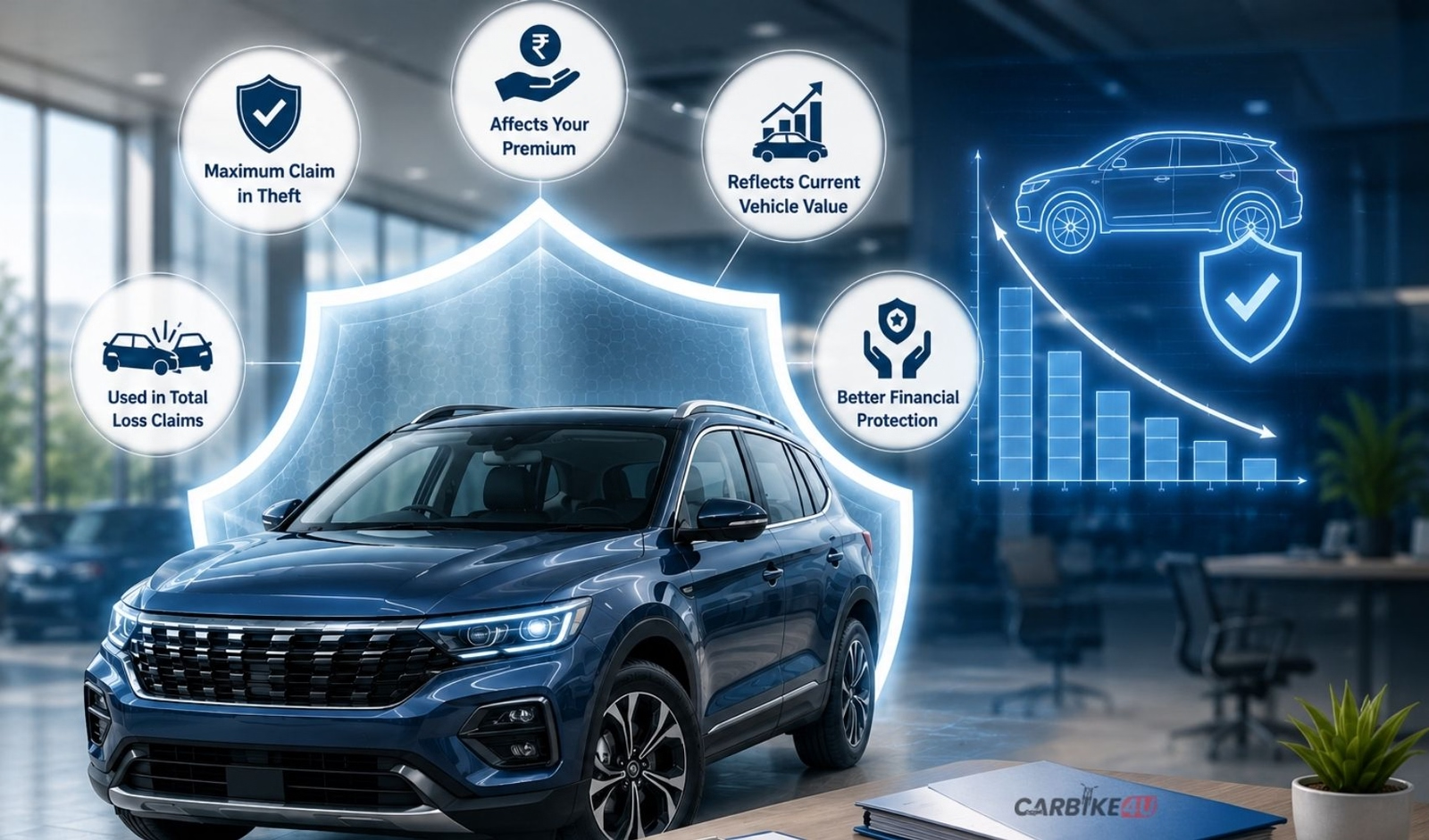
Key Reasons Why IDV Matters
It determines the maximum claim amount in case of theft. |
It is used during total loss claims. |
It directly affects your insurance premium. |
It reflects the current value of your vehicle. |
It helps provide better financial protection. |
Choosing the right IDV is important because both very high and very low values can have their own drawbacks.
When Is IDV Used?
Many car owners believe that IDV applies to every insurance claim. However, that is not the case. IDV is mainly considered in situations where the vehicle is stolen or suffers severe damage.
1. Vehicle Theft
If your car is stolen and cannot be recovered, the insurance company generally settles the claim based on the IDV mentioned in your policy.
2. Total Loss
If your vehicle is badly damaged in an accident and repairing it is not practical, the insurer may classify it as a total loss. In such cases, the claim settlement is usually based on the IDV.
3. Constructive Total Loss (CTL)
A vehicle may be considered a Constructive Total Loss when the repair cost becomes very high compared to its insured value. In this situation, the insurance company may use the IDV as the basis for claim settlement.
How Is IDV Calculated?
Insurance companies calculate IDV by considering the vehicle's ex-showroom price and then applying depreciation based on its age.
The calculation does not include registration charges, road tax or insurance costs.
Simple Formula
IDV = Manufacturer's Selling Price – Depreciation
If the car has additional accessories, their depreciated value may also be added while calculating the final IDV.
IDV = Vehicle Value After Depreciation + Value of Accessories After Depreciation
The amount of depreciation applied to a vehicle directly impacts its IDV and claim value. If you want better protection against depreciation-related deductions, read our comparison of Zero Depreciation vs Comprehensive Car Insurance.
Example of IDV Calculation
Let's understand this with a simple example.
Suppose:
Ex-showroom price of the car: ₹10 lakh
Vehicle age: 2 years
Depreciation applied by insurer
After considering depreciation, the insurance company may calculate the vehicle's value at around ₹8 lakh.
In this case:
IDV = ₹8 lakh
If the car is stolen or declared a total loss, the claim amount would generally be based on this IDV.
Factors That Affect IDV
The IDV of a vehicle is not fixed. It depends on several factors that influence the current market value of the car.
Important Factors
Vehicle age |
Brand and model |
Variant |
Ex-showroom price |
Depreciation |
Additional accessories |
Overall vehicle condition in some cases |
As a vehicle gets older, its IDV gradually decreases because depreciation increases over time.
How Does IDV Affect Your Insurance Premium?
There is a direct relationship between IDV and insurance premium. Generally, a higher IDV results in a higher premium, while a lower IDV reduces the premium amount.
Higher IDV
Higher insurance premium |
Better financial protection |
Higher claim amount in case of theft or total loss |
Lower IDV
Lower premium |
Lower claim settlement amount |
Reduced financial protection |
This is why selecting the correct IDV is important. Choosing a very low IDV just to save a small amount on premium may not be beneficial later.
Should You Choose a High or Low IDV?
Many vehicle owners try to reduce their insurance premium by choosing a lower IDV. While this may save some money initially, it can also reduce the compensation you receive during a major claim.
Choosing a Higher IDV
Pros:
Better protection |
Higher claim payout |
Greater peace of mind |
Cons:
Higher premium |
Choosing a Lower IDV
Pros:
Lower premium |
Cons:
Lower claim settlement |
Risk of being underinsured |
For most car owners, it is usually best to choose an IDV that is close to the actual market value of the vehicle.
Common Myths About IDV
There are several misconceptions about IDV among vehicle owners. Let's clear up some common myths.
Myth 1: IDV Is the Purchase Price of the Car
False. IDV is the current value of the vehicle after depreciation and not the original purchase price.
Myth 2: Higher IDV Means Higher Claim Amount in Every Situation
False. IDV mainly applies to theft and total loss claims. Regular repair claims are handled differently.
Myth 3: Choosing the Lowest IDV Is Always Better
False. A lower IDV may reduce your premium, but it can also reduce the compensation you receive during major claims.
Tips for Car Owners
Before purchasing or renewing a car insurance policy, it is important to pay attention to the IDV mentioned in the policy.
A few simple checks can help you make a better decision and avoid problems later.
Things to Remember
Always check the IDV before buying a policy. |
Compare IDV values while comparing insurance plans. |
Avoid selecting an unrealistically low IDV. |
Review the IDV every time you renew the policy. |
Understand how depreciation affects your vehicle's value. |
Final Thoughts
IDV, or Insured Declared Value, is one of the most important terms in car insurance. It represents the current value of your vehicle and plays a major role in determining how much compensation you may receive if the vehicle is stolen or damaged beyond repair. A higher IDV usually offers better protection but comes with a slightly higher premium. On the other hand, a lower IDV may reduce the premium but can also reduce the claim amount.
Understanding how IDV works can help you choose the right insurance policy and ensure that your vehicle has the financial protection it needs. Before buying or renewing car insurance, always review the IDV carefully and make sure it accurately reflects your vehicle's value.

Written by Team CarBike4U
Editorial & Research Team
CarBike4U's dedicated editorial team researches, reviews, and updates content to bring you the most accurate automotive news, pricing, comparisons, and ownership guidance.