Automotive Blog
Zero Depreciation vs Comprehensive Car Insurance – Which One Should You Buy in India

Every car owner in India has faced this question at some point. When renewing insurance the agent offers you comprehensive cover and then says there is an add-on called zero depreciation for a little extra premium. Should you take it or not.
Most people say yes without fully understanding what they are paying for. Some people say no to save money without realising what they are giving up. Many buyers make insurance decisions without understanding the policy details, which can lead to costly mistakes later.
This blog explains both policies in the simplest possible way. By the time you finish reading you will know exactly which one to buy for your situation.
What Is Comprehensive Car Insurance
Comprehensive car insurance is the most complete form of car insurance you can buy in India. It covers two big things together.
The first is third party liability. This means if your car hits someone else's car, a person or any property, the insurance pays for the damage caused to the other person. This part is actually mandatory by law in India. You cannot drive a car without at least third party insurance. New car buyers should also make sure they complete all the required paperwork before taking delivery.
The second part is own damage cover. This is where comprehensive insurance goes beyond the legal requirement. It covers damage to your own car from accidents, collisions, fire, theft, natural disasters like floods and earthquakes and man-made events like riots and strikes.
So if your car gets damaged in a flood or if someone breaks into it and steals it or if you meet with an accident your comprehensive policy pays for repairs or replacement.
Comprehensive insurance is not mandatory by law but it is strongly recommended because without it you pay for all repairs to your own car out of your pocket.
What Is Zero Depreciation Insurance
Zero depreciation insurance is not a separate policy. It is an add-on that you buy along with your comprehensive insurance. You cannot buy zero depreciation on its own.
To understand zero depreciation you first need to understand what depreciation means for a car.
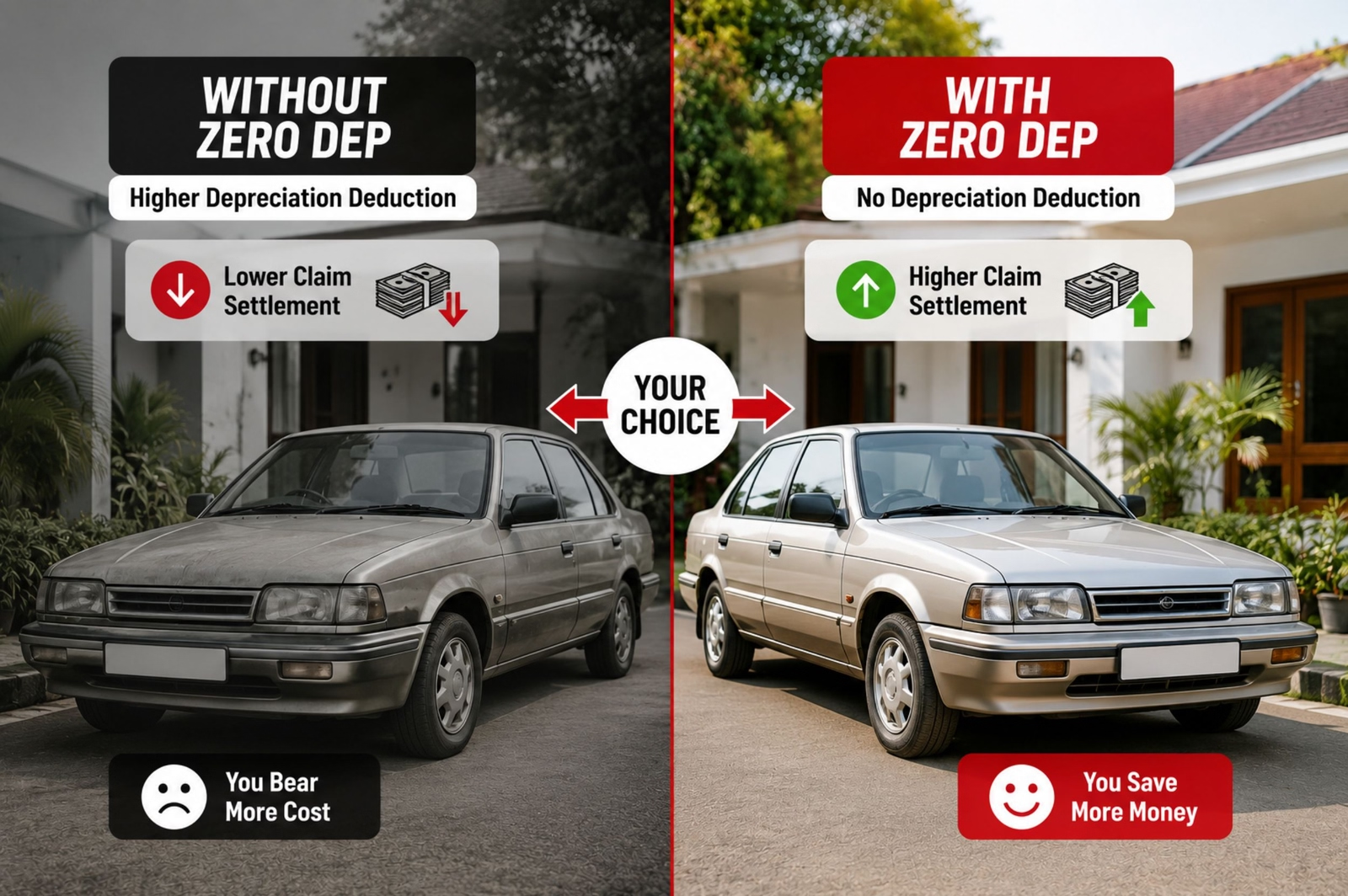
When your car is new it has full value. As it gets older and parts get used the value of those parts goes down. This reduction in value is called depreciation. Insurance companies follow a standard depreciation chart and when you make a claim they deduct the depreciation value of the damaged parts before paying you.
Here is a simple example. Your car is 3 years old and the front bumper gets damaged in an accident. The bumper costs Rs 15,000 to replace. The insurance company looks at the depreciation chart and says the bumper has depreciated by 30 percent in 3 years. So they pay you only Rs 10,500 and you have to pay the remaining Rs 4,500 from your own pocket.
With zero depreciation this deduction does not happen. The insurance company pays the full Rs 15,000 for the bumper replacement. You pay nothing extra.
That is the only difference between comprehensive and zero depreciation. Zero depreciation removes the depreciation deduction from your claim amount.
How Depreciation Is Calculated on Car Parts
Insurance companies in India use a standard depreciation schedule approved by IRDAI. Here is how it works:
Car Age | Depreciation on Plastic | Depreciation on Metal Parts |
|---|---|---|
Less than 6 months | 5 percent | Nil |
6 months to 1 year | 10 percent | Nil |
1 to 2 years | 15 percent | Nil |
2 to 3 years | 25 percent | Nil |
3 to 4 years | 35 percent | Nil |
4 to 5 years | 40 percent | Nil |
5 to 10 years | 50 percent | Nil |
Now here is something important to know. Most car body parts that get damaged in accidents are plastic, rubber or fibre. Bumpers, headlamp housings, side panels, door trim, windshields all of these attract high depreciation. Metal parts like the chassis or body shell attract less depreciation but are also less commonly replaced.
This means in a typical accident claim most of the damage is on parts that depreciate the most. And without zero depreciation you end up paying a significant chunk from your own pocket even after having insurance.
What Zero Depreciation Does NOT Cover
This is something most people miss. Zero depreciation covers the cost of parts without deducting depreciation. But it does not cover everything.
Zero depreciation does not cover tyres and tubes. These always attract depreciation even with a zero dep policy. Usually only 50 percent of tyre replacement cost is paid.
Zero depreciation does not cover mechanical or electrical breakdown not caused by an accident.
Zero depreciation does not cover wear and tear of parts from regular use.
Consumables like engine oil, coolant, brake fluid and nuts and bolts used during repairs are not fully covered. Some insurers cover consumables as a separate add-on.
The number of zero depreciation claims you can make in a year is usually limited to two by most insurers. After two claims they may reduce the zero dep cover or charge extra at renewal.
Comprehensive vs Zero Depreciation – Simple Comparison Table
Feature | Comprehensive Only | Comprehensive With Zero Dep |
|---|---|---|
Third Party Cover | Yes | Yes |
Own Damage Cover | Yes | Yes |
Depreciation Deducted on Claim | Yes | No |
Tyre Depreciation | Yes | Yes (still applies) |
Consumables Cover | No | No (separate add-on) |
Premium Cost | Lower | 15 to 20 percent higher |
Best For | Older cars above 5 years | New cars up to 5 years |
Claim Limit Per Year | Unlimited | Usually 2 claims |
Other Important Add-Ons Worth Knowing About
While you are looking at zero depreciation it is worth knowing about a few other useful add-ons:
Engine Protection Cover
This covers damage to the engine caused by water ingression during floods or oil leakage. Without this add-on engine damage is not covered under standard comprehensive policies. Very important if you live in a flood-prone city like Mumbai, Chennai or Hyderabad.
Return to Invoice
If your car is stolen or gets totally damaged beyond repair this add-on pays you the original invoice value of the car. Without it you only get the current market value which is always lower than what you paid.
Roadside Assistance
Covers towing, emergency fuel delivery, flat tyre assistance and locksmith help if you get stranded anywhere in India. Very practical for frequent highway drivers.
Consumables Cover
Pays for the cost of engine oil, brake oil, coolant, nuts and bolts and other consumables used during repairs after an accident. Complements zero depreciation nicely.
NCB Protection
Protects your No Claim Bonus even if you make one claim in a year. This can save a significant amount on your next year's premium.

Written by Team CarBike4U
Editorial & Research Team
CarBike4U's dedicated editorial team researches, reviews, and updates content to bring you the most accurate automotive news, pricing, comparisons, and ownership guidance.