Automotive News
EV vs Petrol Running Cost: How Much Does EV Charging Cost in India?
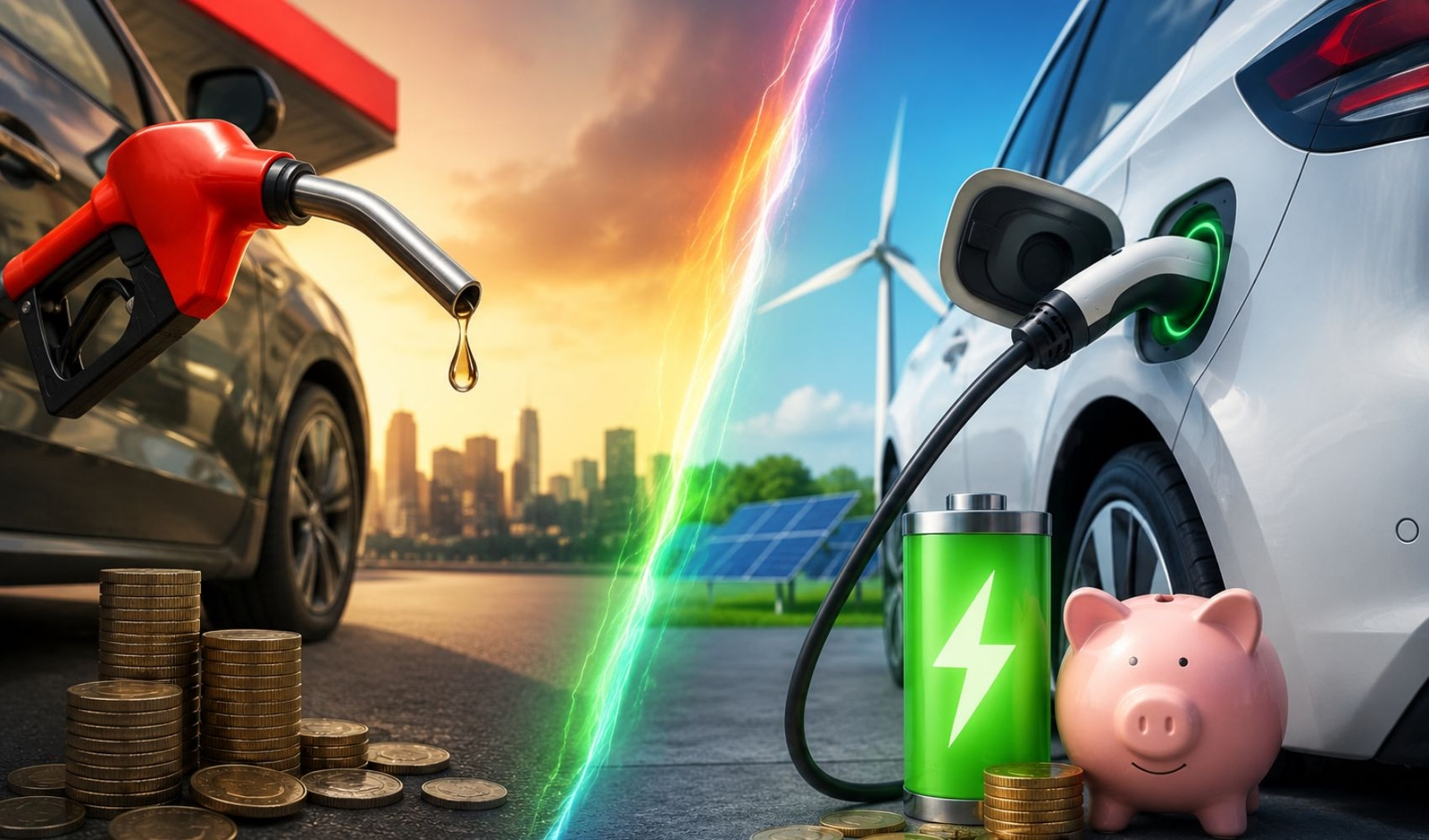
Electric vehicles (EVs) are gaining popularity in India as fuel prices continue to rise and buyers look for more affordable transportation options. From compact city cars to premium electric SUVs, the number of EV choices available in the market is increasing every year. However, one question still remains at the top of every buyer's mind: Is an electric vehicle really cheaper to run than a petrol car?
While the purchase price of an EV is often higher than a comparable petrol vehicle, the running cost tells a very different story. Charging an electric car generally costs much less than filling a fuel tank, making EVs an attractive option for daily commuters and long-term owners. In this article, we take a closer look at EV charging costs in India, compare them with petrol running expenses, and find out how much money drivers can potentially save by switching to an electric vehicle.
How Is EV Charging Cost Calculated?
The cost of charging an electric vehicle mainly depends on two factors:
Battery capacity of the vehicle
Electricity tariff in your area
The basic formula is simple:
Charging Cost = Battery Capacity (kWh) × Electricity Rate per Unit
For example, if an EV has a 30 kWh battery pack and the electricity tariff is ₹8 per unit, the cost of a full charge will be:
30 × ₹8 = ₹240
This means the vehicle can be fully charged for approximately ₹240 at home.
Average EV Charging Cost in India
Electricity rates vary from state to state, while public charging prices depend on the charging network and charger type. However, typical charging costs in India are generally as follows:
Home Charging
Around ₹5 to ₹10 per unit (kWh)
Usually the most economical charging option
Preferred by most EV owners
Public AC Charging
Around ₹10 to ₹18 per kWh
Suitable for regular charging when away from home
Public DC Fast Charging
Around ₹15 to ₹25 per kWh
Offers faster charging but at a higher cost
Actual charging prices may vary depending on location, operator and electricity tariffs.
How Much Does It Cost to Charge Popular EVs?
Here are some estimated charging costs based on a home electricity tariff of ₹8 per unit:
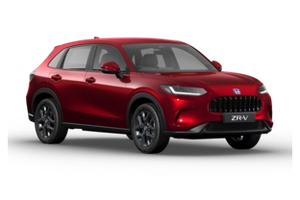
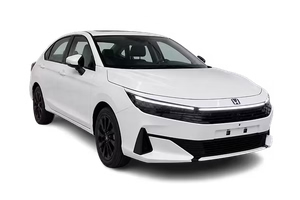
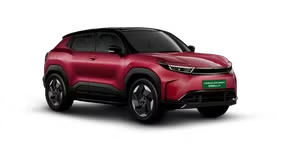
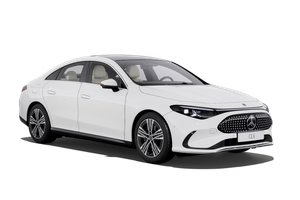
EV Model | Battery Capacity | Full Charging Cost |
|---|---|---|
24 kWh | ₹192 | |
35 kWh | ₹280 | |
45 kWh | ₹360 | |
38 kWh | ₹304 | |
39.4 kWh | ₹315 |
These figures are intended to provide a general idea and may differ depending on electricity rates and charging efficiency.
EV Running Cost Per Kilometre
One of the biggest advantages of an EV is its low running cost.
Most electric cars sold in India can deliver anywhere between 250 km and 500 km on a full charge, depending on the model, battery size and driving conditions.
Let's take a simple example:
Battery size: 30 kWh
Charging cost: ₹240
Driving range: 300 km
Running cost per kilometre:
₹240 ÷ 300 = ₹0.80 per km
In practical usage, most EVs in India typically cost around ₹1 to ₹2 per kilometre to run when charged at home.
Petrol Car Running Cost Per Kilometre
Now let's compare this with a petrol-powered vehicle.
Assume:
Petrol price: ₹100 per litre
Fuel efficiency: 15 kmpl
Running cost per kilometre:
₹100 ÷ 15 = ₹6.67 per km
This means a petrol car can cost around ₹6 to ₹7 per kilometre to run, which is significantly higher than the running cost of most electric vehicles.
EV vs Petrol Running Cost Comparison
Category | Electric Vehicle | Petrol Car |
|---|---|---|
Energy Cost | Lower | Higher |
Running Cost Per Km | ₹1 to ₹2 | ₹6 to ₹8 |
Home Refuelling | Available | Not Available |
Maintenance Cost | Lower | Higher |
Engine Oil Changes | Not Required | Required |
Tailpipe Emissions | Zero | Present |
The cost difference becomes even more noticeable for people who drive regularly or cover long distances every month.
How Much Can You Save Every Month?
Let's assume a person drives around 1,500 km every month.
Electric Vehicle
Running cost: ₹1 per km
Monthly cost: ₹1,500
Petrol Car
Running cost: ₹6.5 per km
Monthly cost: ₹9,750
Potential Monthly Savings
₹9,750 − ₹1,500 = ₹8,250
This example shows that an EV owner could potentially save more than ₹8,000 every month on running costs alone.
Factors That Affect EV Charging Cost
Several factors can influence the actual cost of charging an electric vehicle.
Electricity Tariff
Electricity rates differ across states and utility providers.
Charging Type
Fast chargers generally cost more than home charging solutions.
Battery Capacity
Vehicles with larger batteries require more electricity for a full charge.
Driving Style
Frequent acceleration and high-speed driving can increase energy consumption.
Weather Conditions
Very hot or cold temperatures may affect battery efficiency and driving range.
Is an EV Always Cheaper Than a Petrol Car?
For most city users and daily commuters, an EV is usually much cheaper to run than a petrol vehicle.
However, buyers should also consider factors such as:
Initial purchase price |
Charging infrastructure availability |
Long-distance travel needs |
Battery warranty |
Ownership duration |
The longer you own and drive an EV, the more noticeable the savings become.
Final Thoughts
Electric vehicles are steadily becoming a practical and cost-effective choice for Indian buyers. Although the upfront cost of purchasing an EV may still be higher than a comparable petrol car, the significantly lower running and maintenance expenses can help offset that difference over time. For drivers who cover a good amount of distance every month, the savings can be substantial.
In many cases, charging an EV at home costs only a fraction of what it takes to fuel a petrol vehicle. Along with lower operating costs, EVs also offer a quieter driving experience and produce zero tailpipe emissions. As India's charging infrastructure continues to expand and more affordable electric vehicles enter the market, EV ownership is expected to become even more convenient. For buyers looking to reduce their daily fuel expenses and long-term running costs, an electric vehicle can be a smart investment for the future.

Written by Team CarBike4U
Editorial & Research Team
CarBike4U's dedicated editorial team researches, reviews, and updates content to bring you the most accurate automotive news, pricing, comparisons, and ownership guidance.