Automotive News
Electric Car Battery Life in India: A Complete Guide
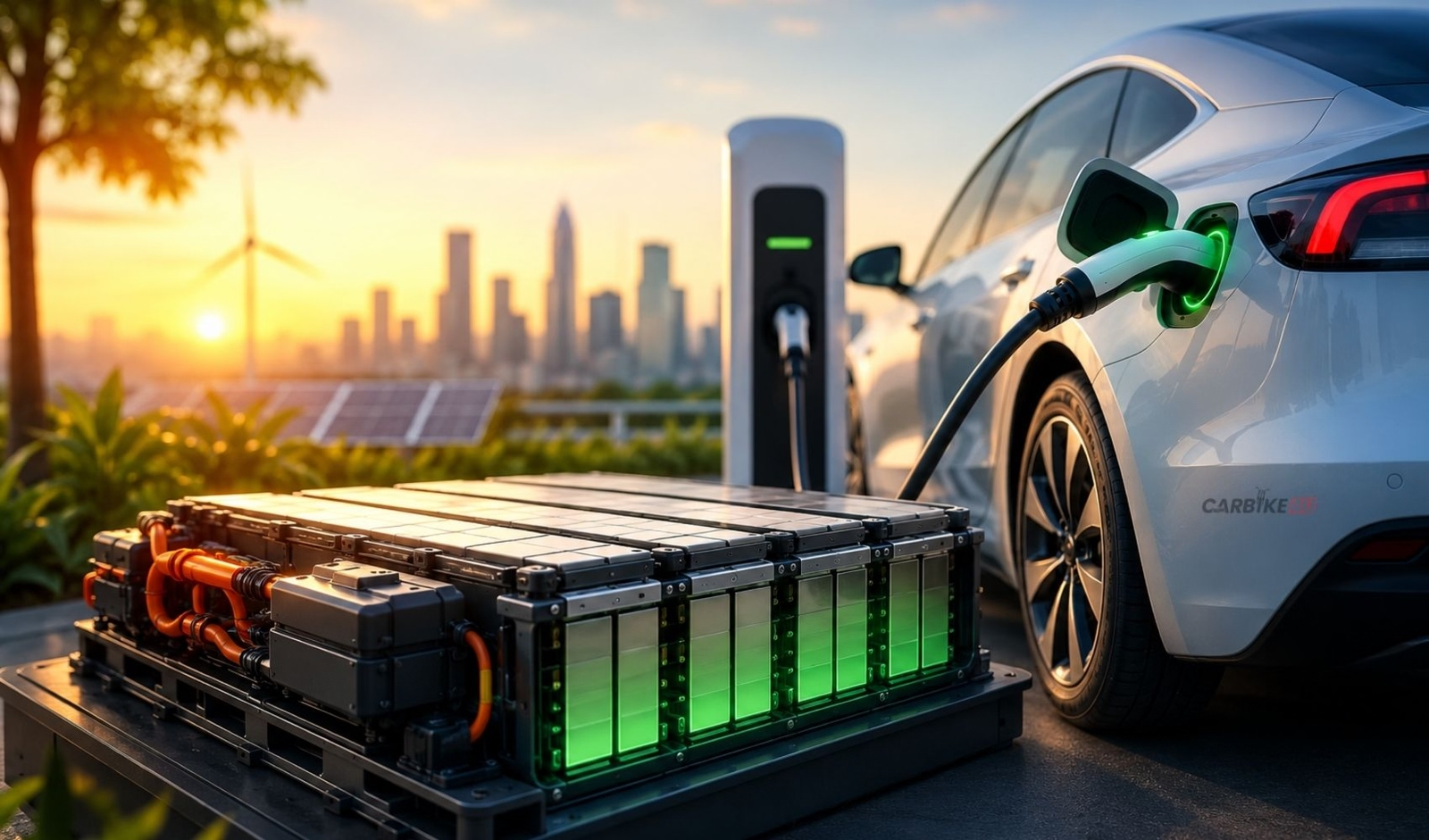
One of the most common questions people ask before buying an electric vehicle is about battery life. Since the battery is the most important and expensive part of an EV, many buyers want to know how long it will last, whether it will lose performance over time, and if replacing it will be costly. The good news is that modern EV batteries are much more reliable than many people think. Thanks to improvements in battery technology, battery management systems and charging infrastructure, today's electric car batteries are designed to last for many years.
In fact, most EV owners are unlikely to face a battery replacement during their ownership period. Many electric vehicles on the road today continue to perform well even after years of regular use. In this article, we explain how long EV batteries typically last in India, what affects battery health, how battery degradation works, and what you can do to keep your EV battery in good condition for longer.
What Is the Average Life of an EV Battery?
Most electric vehicles use lithium-ion battery packs, which are known for their durability and long lifespan.
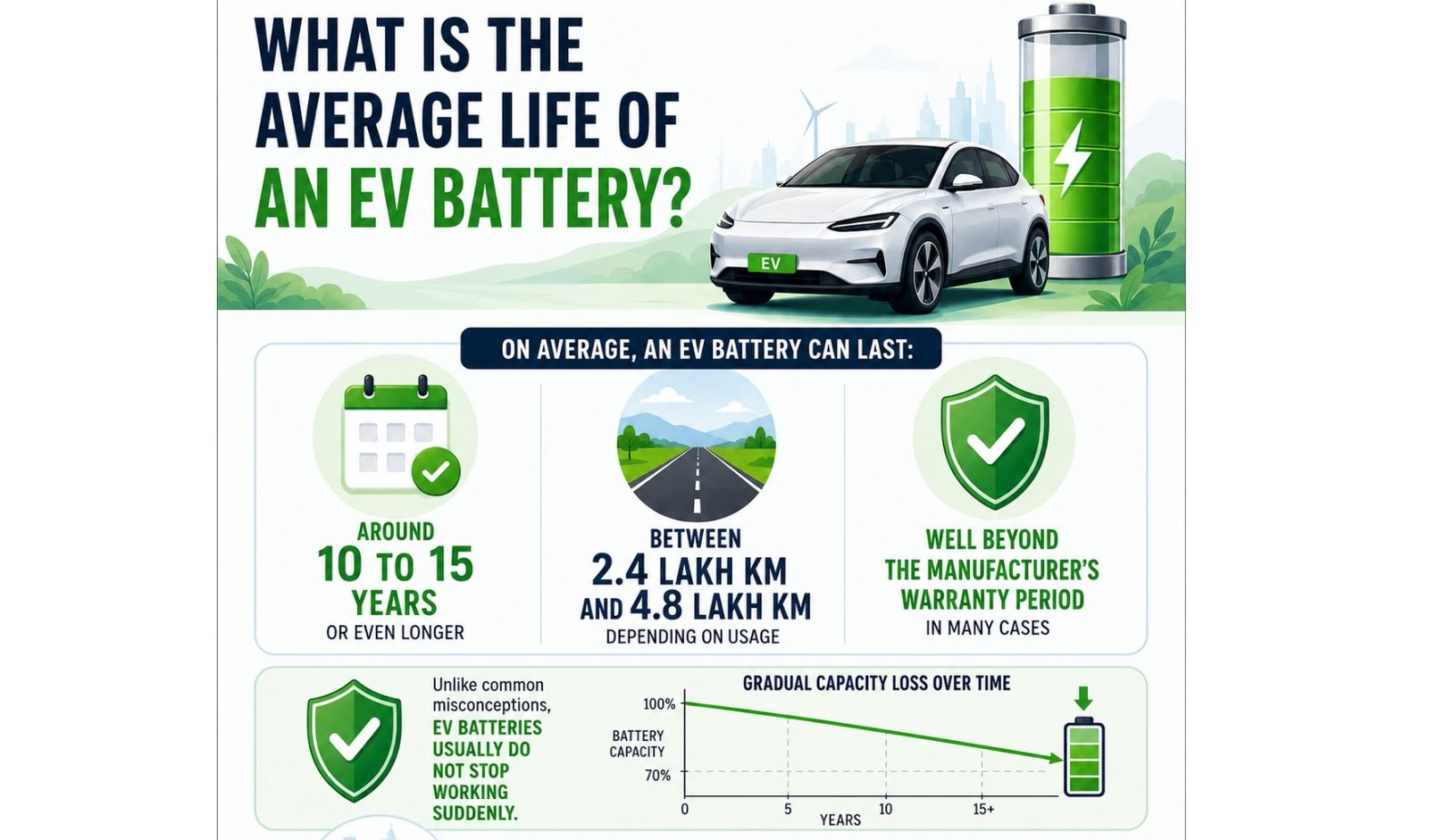
On average, an EV battery can last:
Around 10 to 15 years or even longer |
Between 2.4 lakh km and 4.8 lakh km depending on usage |
Well beyond the manufacturer's warranty period in many cases |
Unlike common misconceptions, EV batteries usually do not stop working suddenly. Instead, they gradually lose a small amount of capacity over time while continuing to function normally.
This means that even after several years, most EVs can still provide enough driving range for everyday use.
What Battery Warranty Do EV Manufacturers Offer in India?
To give buyers confidence, most EV manufacturers in India offer long battery warranty coverage.
In most cases, battery warranties are around:
8 years
Up to 1,60,000 km
Popular EV brands such as Tata Motors, Mahindra, MG Motor and Hyundai provide battery warranties that cover manufacturing defects and certain battery performance issues.
Some manufacturers also guarantee a minimum level of battery health during the warranty period. If battery performance drops below the specified limit, the battery may qualify for repair or replacement under warranty terms.
What Is Battery Degradation?
Battery degradation is a normal process that happens in every lithium-ion battery over time. Simply put, it means the battery slowly loses some of its ability to store energy as it gets older.
For example:
A new EV may offer a driving range of 400 km. |
After a few years, the same vehicle may deliver around 360 km to 380 km. |
The battery still works properly but stores slightly less energy than before. |
This gradual reduction in capacity is normal and should not be confused with battery failure.
How Fast Do EV Batteries Lose Performance?
One of the biggest myths about EVs is that their batteries lose performance very quickly. In reality, modern EV batteries degrade at a much slower rate than most people expect.
According to industry data and real-world studies:
Battery capacity loss is generally around 1.5% to 3% per year. |
Many EV batteries still retain 80% to 90% of their original capacity after 8 years. |
Most vehicles remain perfectly usable for daily driving even after covering significant distances. |
This is why complete battery replacement is relatively rare for private EV owners.
Factors That Affect EV Battery Life
The lifespan of an EV battery does not depend only on its age. Several factors such as weather conditions, charging habits, driving style and battery technology can have a significant impact on long-term battery health. Understanding these factors can help EV owners maintain better battery performance and maximize the lifespan of their vehicle's battery pack.
Climate and Temperature
India experiences high temperatures during summer, especially in many northern and western regions. Excessive heat can speed up battery wear over time. However, modern EVs are equipped with battery management systems that help protect the battery from extreme conditions.
Charging Habits
How you charge your EV can have a direct impact on battery health.
For better battery life:
Use home charging for daily needs whenever possible. |
Avoid relying on DC fast charging all the time. |
Do not leave the battery completely empty or fully charged for long periods. |
Driving Style
Aggressive driving habits such as frequent hard acceleration and high-speed driving can increase battery stress and energy consumption.
A smoother driving style can help improve both efficiency and battery longevity.
Battery Technology
Different battery types offer different levels of durability.
Many newer EVs are now using LFP (Lithium Iron Phosphate) batteries because they:
Offer a longer lifespan |
Handle high temperatures better |
Are more durable |
Require less maintenance |
Does Indian Weather Affect EV Battery Life?
Many potential buyers worry that India's hot climate could reduce battery life significantly. While extreme temperatures can have some impact on battery health, modern EVs are designed and tested to operate in Indian conditions.
Manufacturers carry out extensive testing before launching their vehicles in the country. As a result, most modern EVs can comfortably handle daily use in Indian weather without major battery-related issues. Although batteries may degrade slightly faster in very hot regions, the effect is usually not large enough to create serious concerns for most owners.
Will You Need to Replace Your EV Battery?
For the majority of EV owners, battery replacement is unlikely to be required during normal ownership. Most people either upgrade their vehicle or sell it before the battery reaches the point where replacement becomes necessary.
Even after 8 to 10 years of use, many EV batteries still retain enough capacity for regular city and highway driving. As battery technology continues to improve, concerns about battery replacement are becoming less significant than they were a few years ago.
How Much Does EV Battery Replacement Cost?
The cost of replacing an EV battery depends on several factors, including:
Vehicle model
Battery size
Battery technology
Manufacturer
Larger battery packs generally cost more to replace than smaller ones. However, battery prices have been steadily falling over the years as production volumes increase and technology improves.
It is also worth noting that complete battery replacement is not always necessary. In some cases, damaged battery modules or individual cells can be repaired or replaced, reducing the overall cost.
Tips to Increase EV Battery Life
If you want to keep your EV battery healthy for as long as possible, follow these simple tips:
Use home charging whenever possible. |
Avoid excessive use of fast chargers. |
Park in shaded areas during extremely hot weather. |
Maintain proper tyre pressure. |
Follow the charging recommendations provided by the manufacturer. |
Keep your vehicle software updated. |
Avoid keeping the battery at 100% charge for long periods unless necessary. |
Following these habits can help maintain battery health and improve long-term performance.
EV Battery Life vs Petrol Engine Life
Many buyers compare the lifespan of an EV battery with that of a petrol engine.
Interestingly, modern EV batteries are designed to last for a similar period, and in some cases even longer than the typical ownership life of a petrol vehicle.
Petrol cars require regular servicing, engine oil changes and maintenance of several moving parts. Electric vehicles have fewer moving components, which can help reduce maintenance requirements over the long term.
This is one reason why EV ownership can be more cost-effective over time.
Final Thoughts
Battery life is no longer the major concern it once was for electric vehicle buyers. Modern EV batteries are built to last for many years and are supported by long warranty coverage from manufacturers. For most Indian buyers, an EV battery can easily last 10 to 15 years with proper care and responsible charging habits. While some reduction in range is expected over time, battery degradation is usually slow and does not have a major impact on everyday driving.
As EV technology continues to improve and charging infrastructure becomes more widespread across India, owning an electric vehicle is becoming easier and more practical than ever before. If you are planning to buy an EV, battery life should not be seen as a major worry. With proper usage and regular maintenance, most EV batteries are expected to remain reliable and efficient long after the warranty period has ended.

Written by Team CarBike4U
Editorial & Research Team
CarBike4U's dedicated editorial team researches, reviews, and updates content to bring you the most accurate automotive news, pricing, comparisons, and ownership guidance.