Automotive Blog
What Is BS6 Phase 2 and How Does It Affect Your Car in India
If you have been car shopping recently you have probably seen the term BS6 Phase 2 or OBD2 mentioned in car listings and brochures. Most people skip over it without really understanding what it means. But it actually affects your car, your fuel and how your car is serviced.
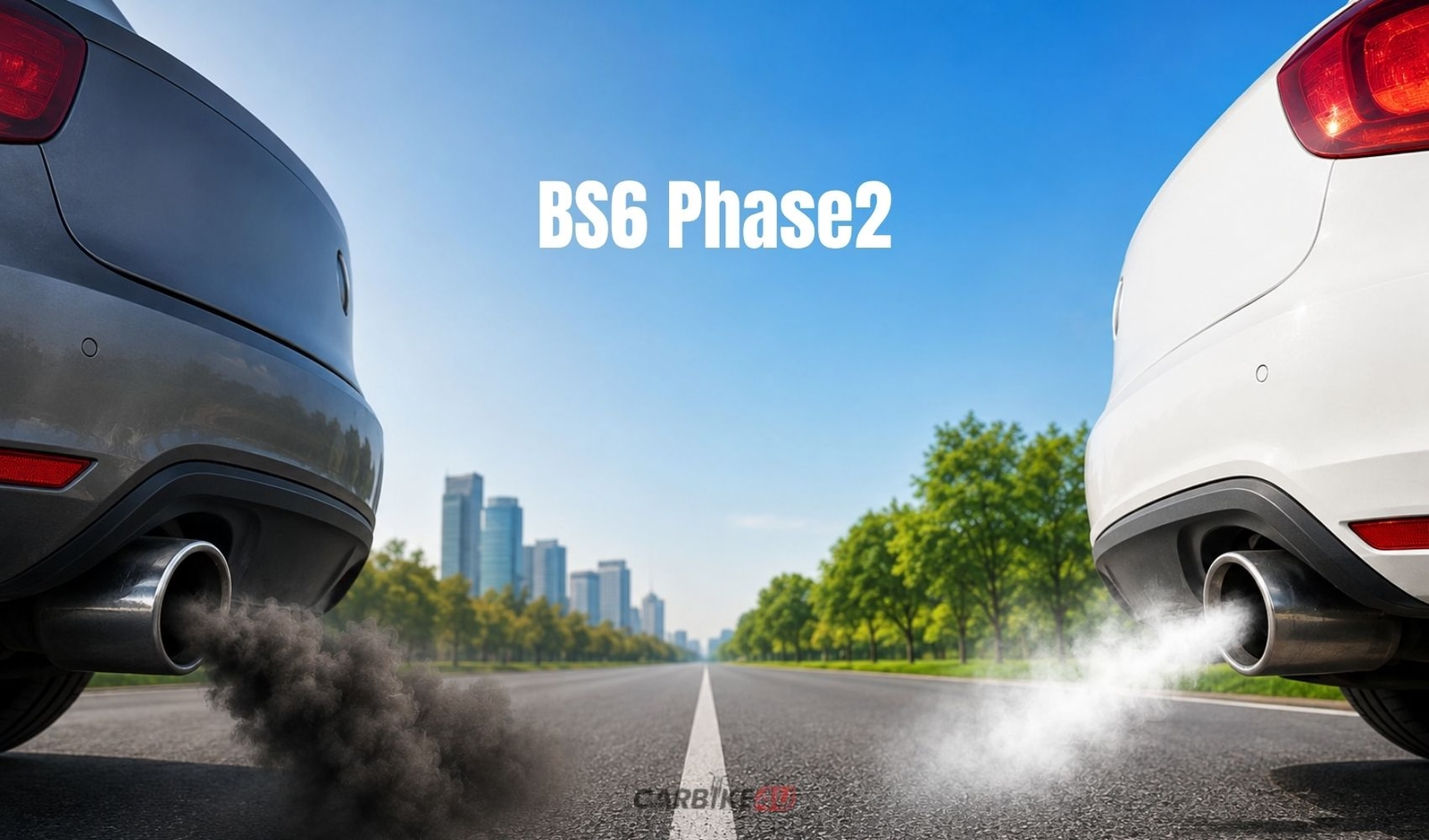
This blog explains BS6 Phase 2 in the simplest possible language. What it is, why it came, what changed and what it means for you as a car owner in India.
What Is Bharat Stage Emission Standard
Bharat Stage or BS is India's emission standard. It sets the maximum limit of harmful gases and particles that a vehicle's engine is allowed to release from its exhaust.
Think of it like a pollution rule for cars. The government says your car cannot release more than this much nitrogen oxide or this much particulate matter. Car manufacturers have to design their engines to stay within these limits.
The higher the BS number the stricter the standard and the cleaner the exhaust.
India has gone through several stages:
Standard | Year Introduced | Notes |
BS1 | 2000 | First emission standard in India |
BS2 | 2001 | Slightly stricter than BS1 |
BS3 | 2005 | Further reduction in NOx and HC |
BS4 | 2010 | Big improvement. Leaded petrol phased out |
BS6 Phase 1 | April 2020 | Skipped BS5 directly. Massive jump in standards |
BS6 Phase 2 | April 2023 | Even stricter. OBD2 mandatory |
India skipped BS5 entirely and jumped straight from BS4 to BS6. That was already a very large improvement. BS6 Phase 2 tightens the rules even further.
What Changed in BS6 Phase 2 vs BS6 Phase 1
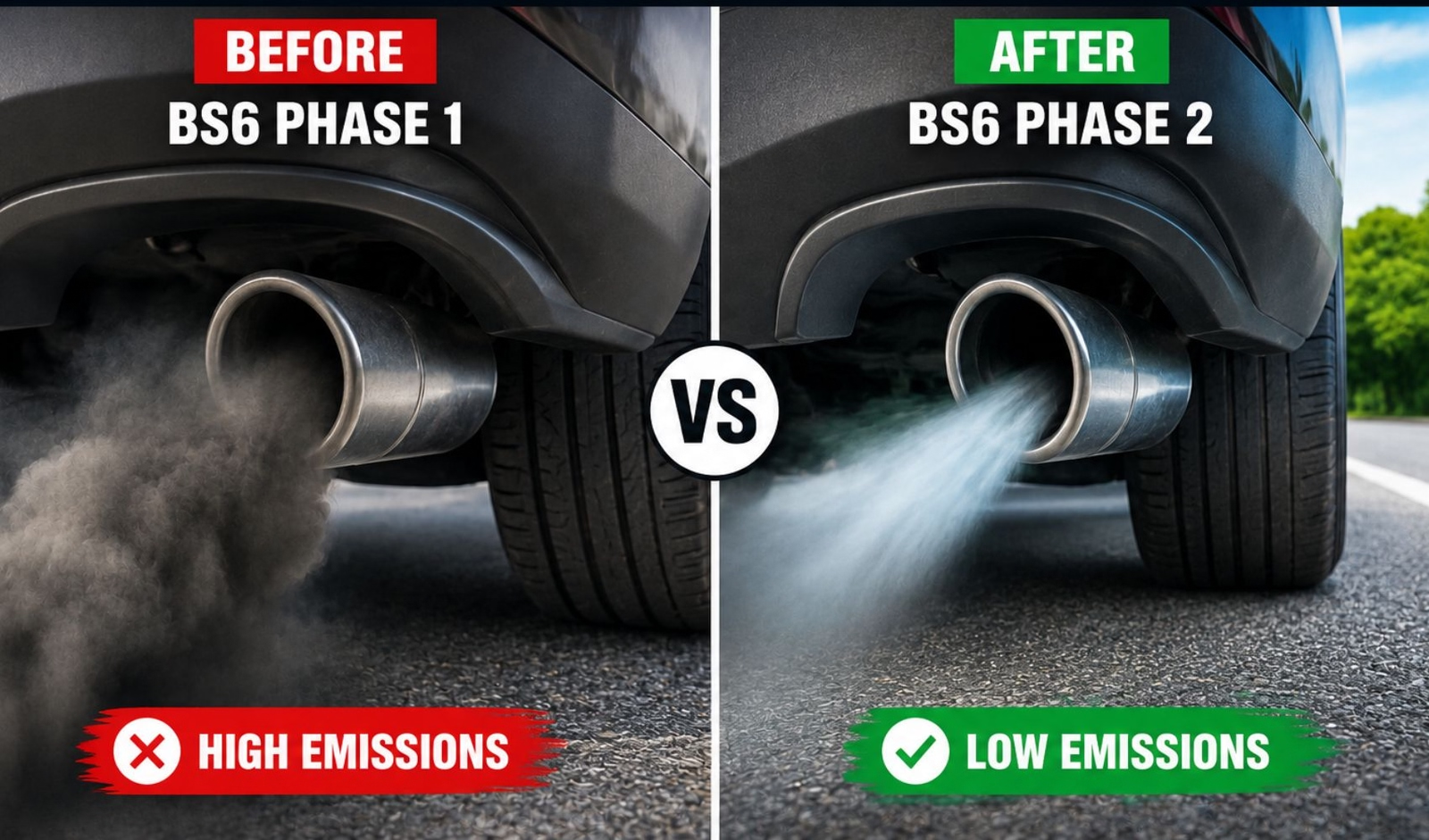
BS6 Phase 2 came into effect in India from April 1 2023. It built on BS6 Phase 1 and added stricter requirements in three key areas.
Stricter Emission Limits
BS6 Phase 2 reduced the allowed limits for Nitrogen Oxides or NOx and particulate matter further compared to Phase 1. NOx is the gas that causes smog and acid rain. Particulate matter or PM is the tiny particles that get into lungs and cause respiratory problems.
For petrol cars the NOx limit dropped from 60 mg per km in BS6 Phase 1 to 35 mg per km in BS6 Phase 2. That is a 40 percent reduction in just three years.
For diesel cars the NOx limit was tightened from 80 mg per km to 55 mg per km. Diesel Particulate Filter or DPF became stricter in its performance requirements.
Real Driving Emissions Testing
This is a big change. In BS6 Phase 1 emission testing happened only in a laboratory under controlled conditions. The car was placed on a dyno and driven in a set pattern. The results were predictable and some manufacturers were able to engineer their cars to pass the lab test without being as clean in real-world driving.
BS6 Phase 2 introduced Real Driving Emissions or RDE testing. A portable emission measurement device is attached to the car and it is driven on actual roads in actual traffic. The emissions are measured in real time.
This means there is no cheating. The car has to be clean not just in a lab but on a real Indian road in real Indian traffic conditions.
OBD2 – On-Board Diagnostics Second Generation
This is the most visible change for car owners. OBD2 stands for On-Board Diagnostics Generation 2. Every new car sold in India from April 2023 onwards must have this system built in.
OBD2 is an advanced system inside your car that continuously monitors the emission-related components. This includes the catalytic converter, oxygen sensors, fuel injection system and exhaust system among others.
If any of these components stops working correctly or if the emission levels go above the allowed limit the OBD2 system detects it and turns on the check engine light or malfunction indicator lamp on your dashboard. It also stores a fault code that a technician can read with a diagnostic tool to identify exactly what went wrong.
How BS6 Phase 2 Affects Petrol Cars
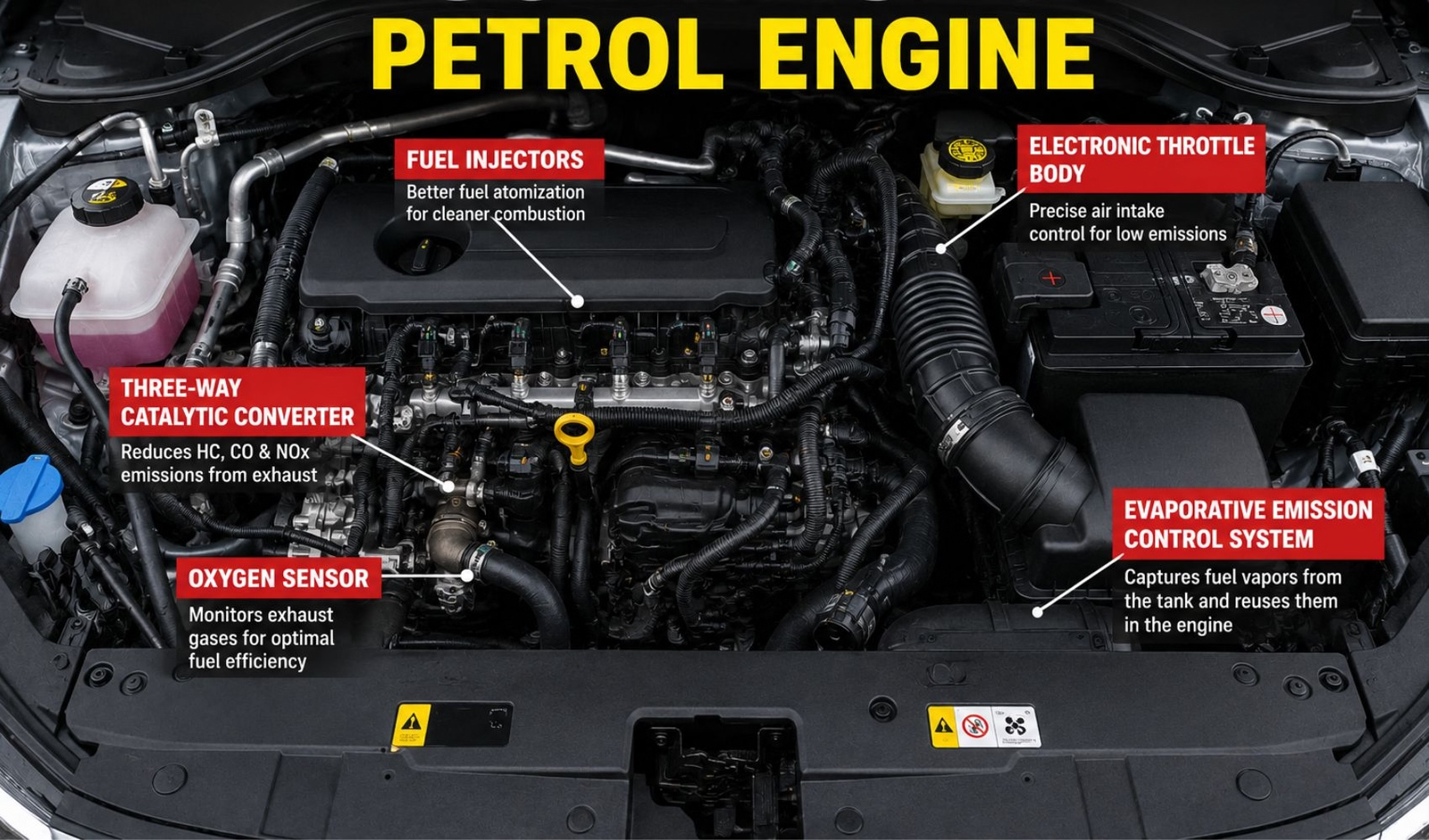
For petrol car owners the most noticeable changes are:
Better fuel injection systems. BS6 Phase 2 petrol cars use direct injection or more refined multi-point fuel injection with tighter tolerances. This makes combustion more efficient and reduces unburnt fuel in the exhaust.
Three-way catalytic converter. A better quality catalytic converter is required to meet the stricter limits. This converts harmful gases into less harmful ones before they exit the exhaust.
Evaporative emission control. Petrol vapors from the fuel tank are now better controlled. A charcoal canister captures these vapors and feeds them back into the engine for combustion instead of releasing them into the atmosphere.
Slightly higher prices. All these improvements cost money to engineer and manufacture. BS6 Phase 2 cars are typically Rs 10,000 to Rs 30,000 more expensive than their BS6 Phase 1 counterparts depending on the model.
How BS6 Phase 2 Affects Diesel Cars
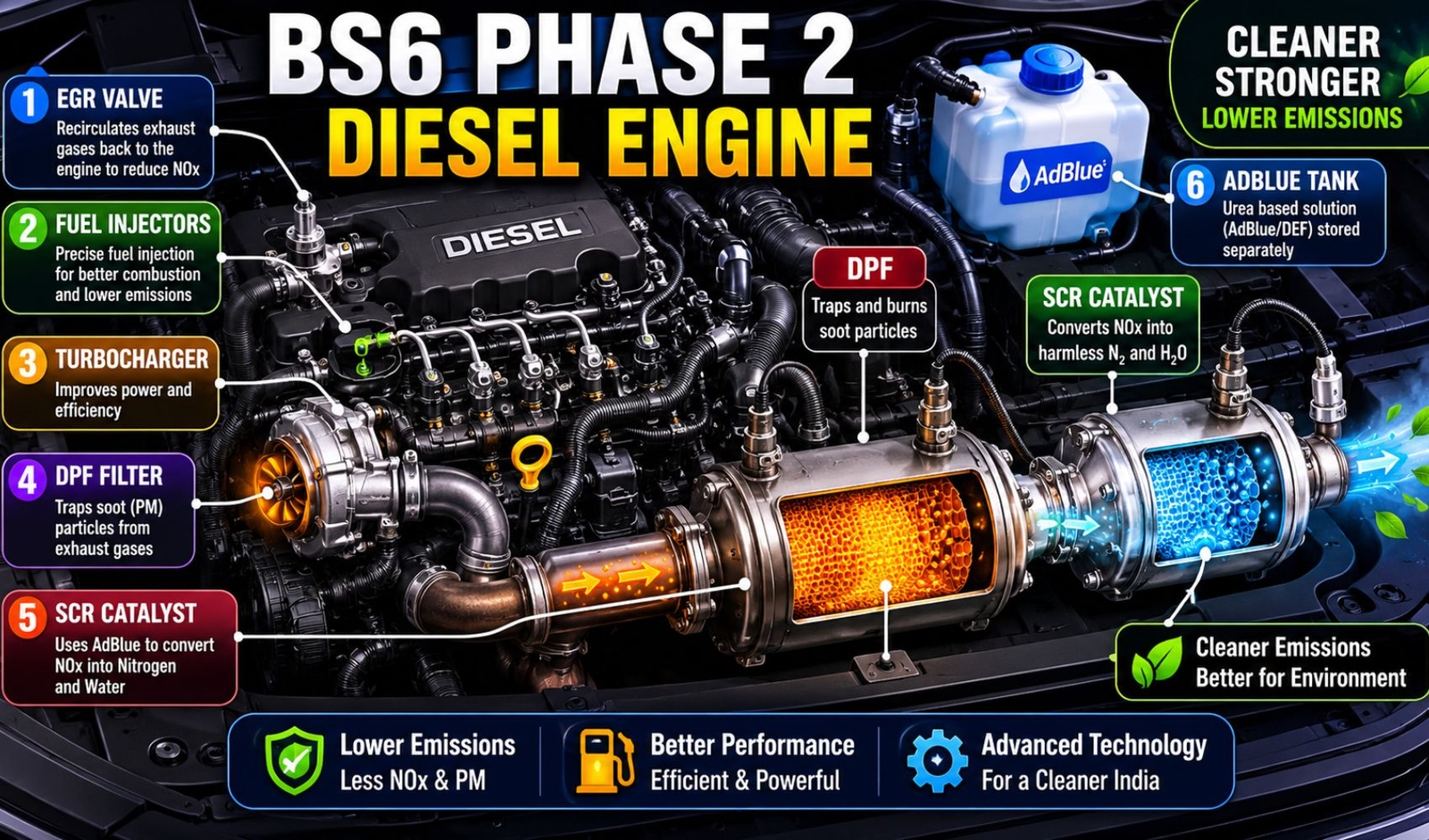
Diesel cars see more significant changes under BS6 Phase 2 because diesel engines inherently produce more NOx and particulate matter than petrol engines.
Diesel Particulate Filter. The DPF traps the soot particles from diesel combustion before they exit the exhaust. BS6 Phase 2 requires better DPF performance. The filter goes through a regeneration process periodically where trapped soot is burned off at high temperature.
Selective Catalytic Reduction. The SCR system uses a urea-based solution called AdBlue or DEF to convert nitrogen oxides into harmless nitrogen and water. This system is more common on bigger diesel vehicles like SUVs and trucks under BS6 Phase 2.
EGR – Exhaust Gas Recirculation. A portion of the exhaust gas is recirculated back into the engine to reduce peak combustion temperatures which reduces NOx formation.
AdBlue for larger diesels. Some larger diesel SUVs and vehicles now require periodic AdBlue top-ups in addition to regular servicing. The AdBlue tank typically needs refilling every 10,000 to 15,000 km.
Does BS6 Phase 2 Affect Your Car's Mileage
Honestly not much. BS6 Phase 2 cars have better fuel injection so combustion is more efficient. Most owners do not notice any difference in mileage during daily driving. Diesel car owners may see a slight dip during DPF regeneration but it is temporary and happens rarely.
Does BS6 Phase 2 Affect Car Servicing
Yes but nothing complicated. Here is what changes:
OBD2 scan at every service — The mechanic plugs in a scanner to check for any fault codes. Takes just a few minutes.
DPF cleaning for diesel cars — If you mostly drive short city trips the diesel particulate filter may need a manual clean at the service centre occasionally.
AdBlue top-up — Some diesel SUVs need an AdBlue fluid refill every 10,000 to 15,000 km. Your dashboard will tell you when it is low.
Use correct engine oil — Always use the oil grade mentioned in your owner's manual. Wrong oil can affect the emission system over time.
Can You Still Drive Your BS4 Car
Yes. BS6 Phase 2 only applies to new cars being sold. Your existing BS4 car can be driven, registered and insured as normal. No ban. No restriction for regular road use.
BS6 Phase 2 and Electric Vehicles
BS6 Phase 2 does not apply to EVs at all. Electric cars have zero tailpipe emissions so there are no emission standards for them. This is one of the main reasons the government is promoting EVs so strongly in India right now.

Written by Team CarBike4U
Editorial & Research Team
CarBike4U's dedicated editorial team researches, reviews, and updates content to bring you the most accurate automotive news, pricing, comparisons, and ownership guidance.