Automotive Blog
Types of Gearboxes Explained: Manual, AMT, CVT, DCT and More — Complete Guide
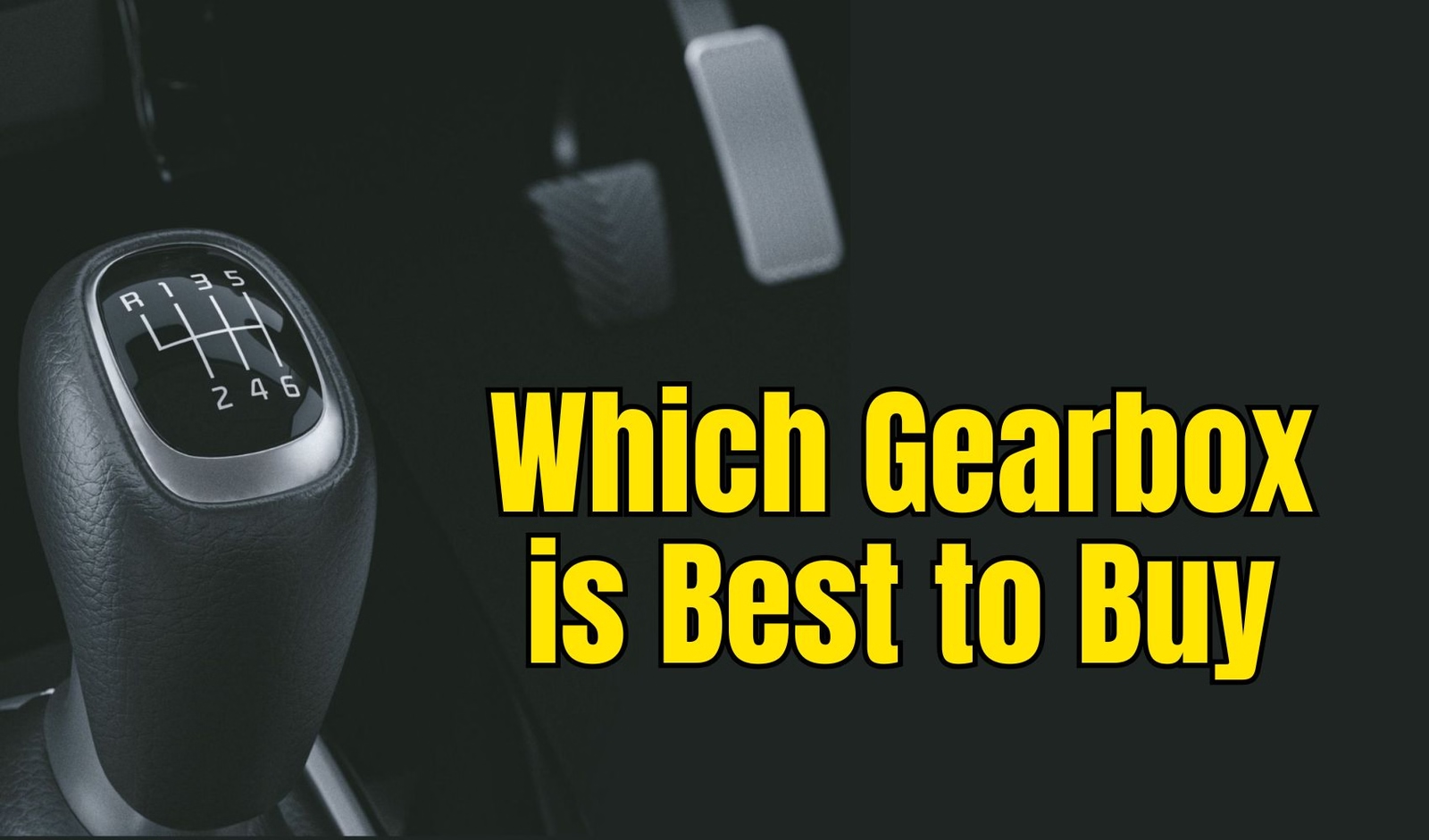
Choosing the right gearbox is one of the most important — and most overlooked — decisions when buying a car. Whether you are comparing manual gearbox vs automatic, trying to understand what a CVT gearbox is, or wondering about gearbox fluid change costs, this complete guide covers everything. From the basic types to maintenance tips, here is all you need to know.
What are 3 types of gearbox?
The car transmissions are categorized into three main types-
Manual
Automatic
Semi-Automatic
Within the 'automatic' transmission, there are many technologies, leading to what we often refer to as 6 types of gears explained in detail below.
1. Manual Transmission (MT)
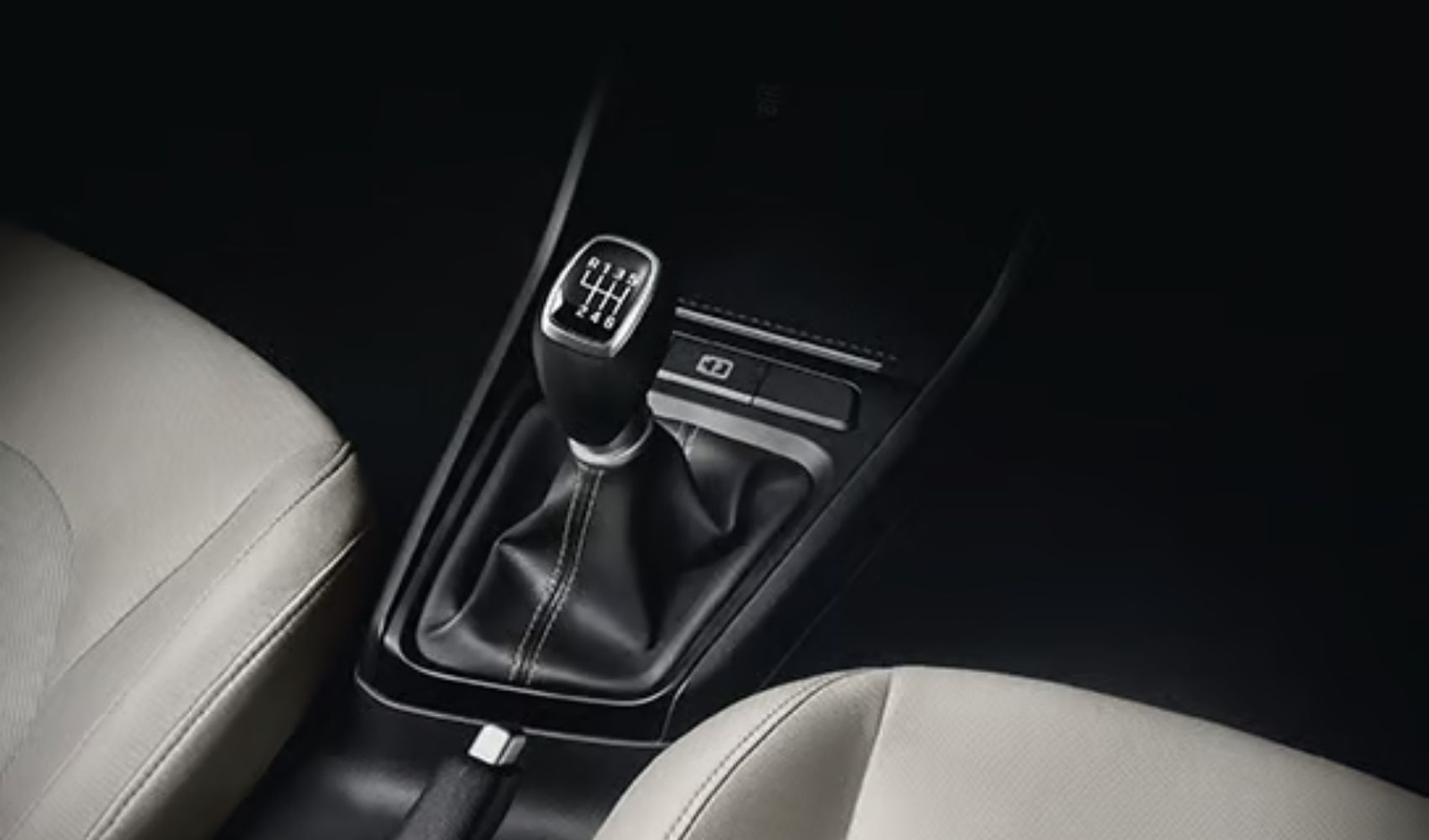
This is the classic, the stick shift, and still the most common type in India. Manual transmissions gives drivers complete control over gear changes. Most cars and SUVs come with five-speed and six-speed manual transmissions. These are generally more affordable, easy to maintain, and deliver good fuel efficiency compared to many automatics. So, they can be quite demanding and popular in bumper-to-bumper city traffic, especially fpr the cars having a heavy clutch action. For those who enjoy engaging driving and want to feel connected with their car, The manual transmission is for those. But urban people ask which automatic transmission is best for city traffic?
Advantages of Manual Transmissions (MT)
More Control & Fun: Gives a hands-on driving feel
Easy & Cheap Repairs: Simpler, costs less to fix
Better for Performance: Great for racing, less heat issues
Good Mileage: Saves more fuel, especially on highways
Common issue of manual transmission
Stalling: Releasing the clutch too fast without enough acceleration
Hard Shifting: Due to worn parts or improper clutch use
Burning Smell: Clutch slips from heavy use or poor driving
2. Intelligent Manual Transmission (iMT)
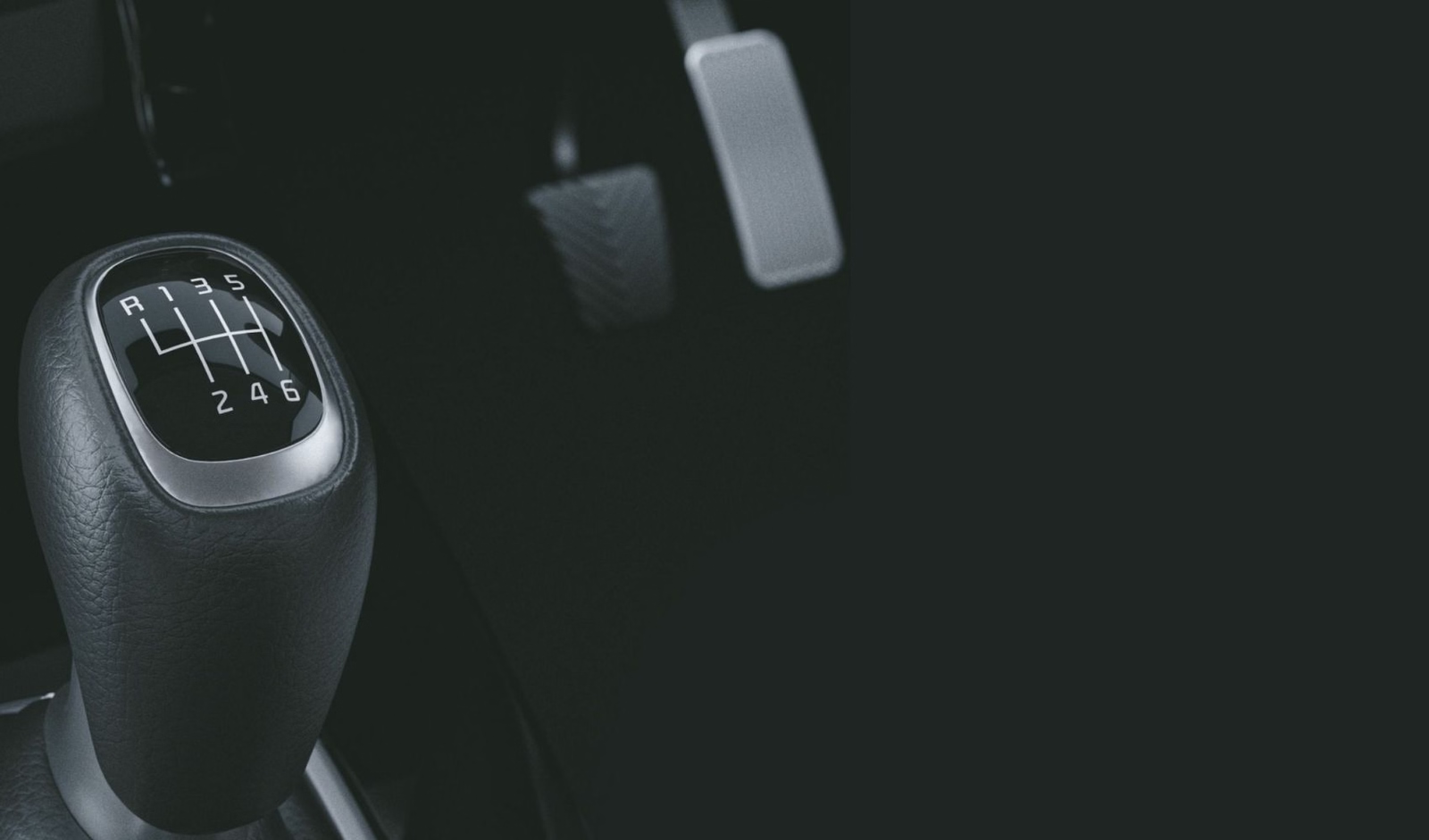
A manual transmission that is clutch free.
That's exactly iMT offers. iMT is a manual gearbox with an automatic clutch. There is no clutch pedal to press. Instead, sensors detect your shifting intent, and actuators handles the clutch operation automatically. You still manually shift gears. If you are thinking iMT gearbox kya hota hai, it is a clever hybrid solution that makes city driving much easier and more convenient than a Manual transmission. while still giving you control over gear selection. It's also claimed to reduce premature clutch wear, a common concern with manual gearboxes.
Benefits of Intelligent Manual Transmission (iMT)
No Clutch Pedal: There is no clutch paddle to shift the gears
Easy Yet Controlled: You change gears, system handles clutch (no stalling)
No Rollback: Stays steady on slopes
Smart Operation: Gear touch triggers automatic clutch action
Disadvantages of Intelligent Manual Transmission (iMT)
Jerky & Laggy: Gear shifts can feel slow and not very smooth
Less Control: Not as direct or engaging as a manual
Lower Mileage: Fuel efficiency can be worse than manual
Costly Repairs: higher maintenance cost
3. Automated Manual Transmission (AMT)
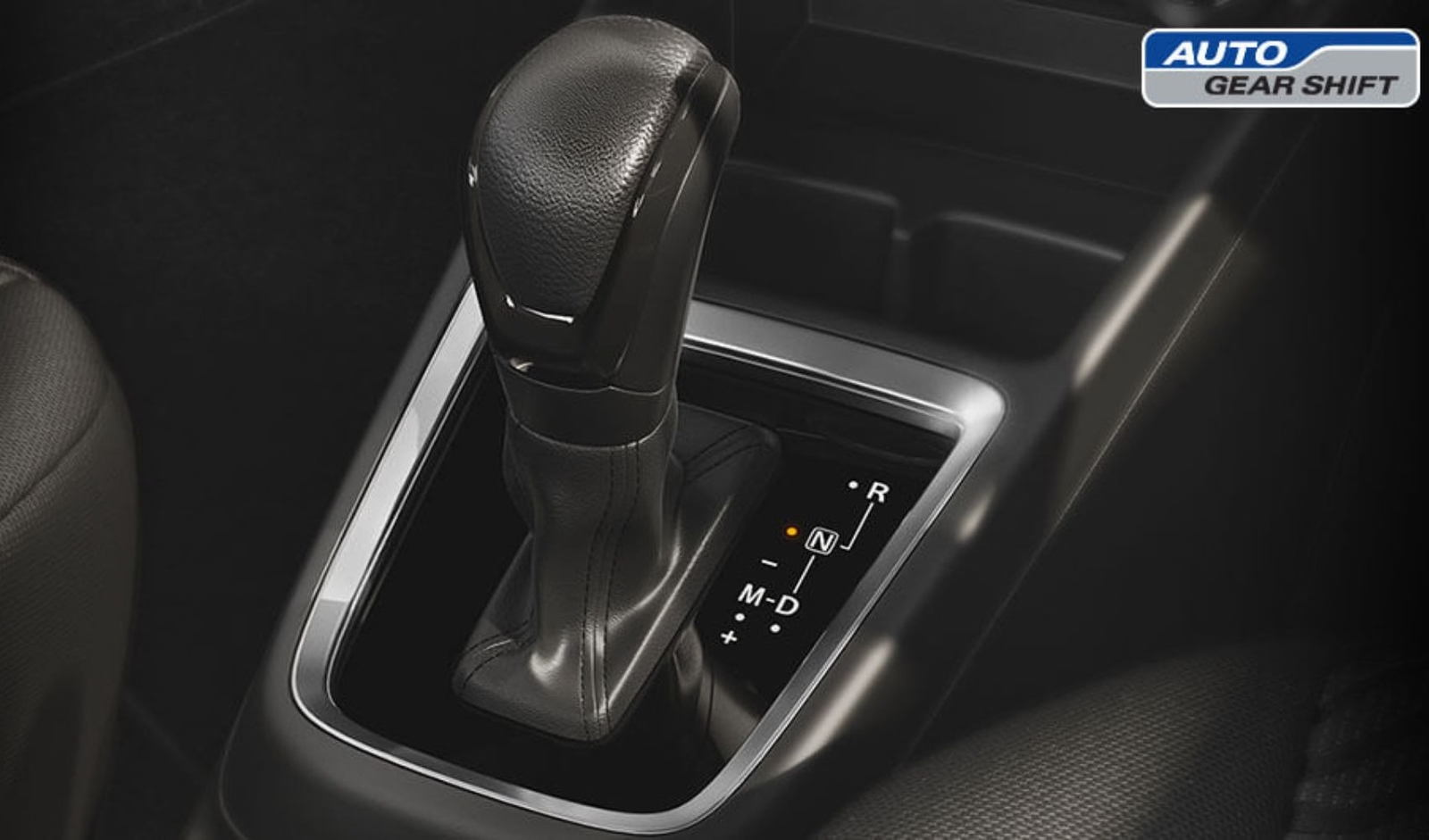
What is AMT gearbox? An AMT Gearbox is a manual gearbox that has been automated. The clutch and gear shifting are controlled by electro-hydraulic actuators and managed by a Transmission Control Unit (TCU). This system monitors vehicle speed, engine RPM, and other variables to shift gears. The biggest advantage of AMTs is their cost-effectiveness and good fuel efficiency. All these makes them a best choice for budget-friendly cars in India. Early AMTs had a reputation for unrefined, jerky shifts, often leading to an automatic car jerking problem AMT. Modern AMTs from Maruti Suzuki and Hyundai, have created significant improvements in smoothness and shift speed. Some drivers still searches for which automatic transmission is best for mileage or overall comfort.
Good-Advantage of Automatic Manual Transmission (AMT)
Good Mileage: Fuel-efficient
Affordable: Lower buying cost
Low Maintenance: Very low maintenance on service
Cons of Automatic Manual Transmission (AMT)
Jerky Shifts: Head-nod vibrates during gear changes
Slow Pickup: Delay while accelerating or overtaking
Hill Rollback: Can roll back on slopes (without assist)
Less Fun to Drive: Not ideal for performance driving
No Park Mode: Depends on handbrake on slopes
4.Torque Converter Automatic (TC AT)
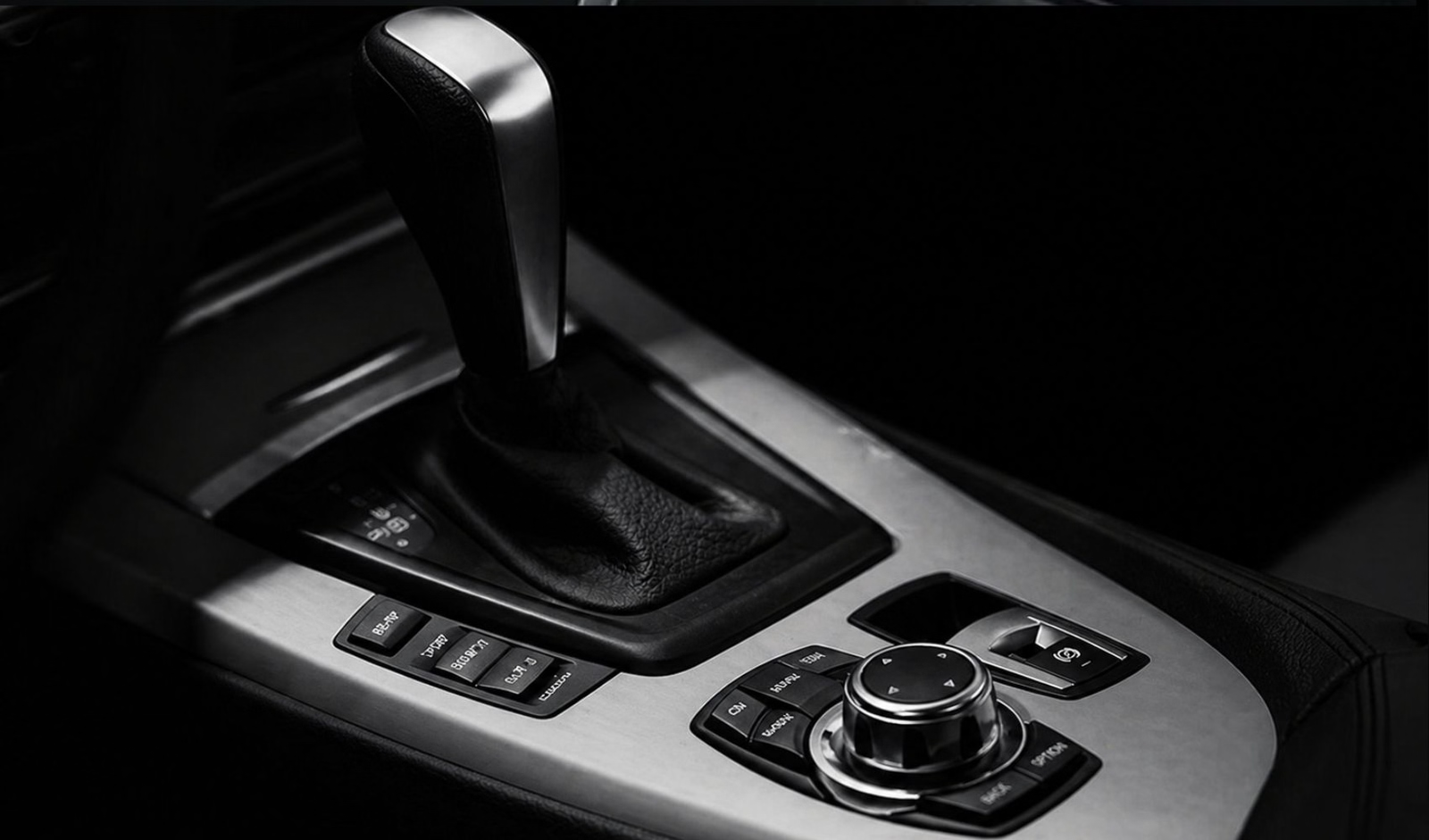
A torque converter automatic transmission use a hydraulic fluid coupling.But not the physical clutch. This transmission is usually found in cars and SUVs with larger engines, and they provide low-end torque and a strong mid-range. TCs can sometimes less fuel-efficient than other automatic types of transmissions due to inherent transmission losses. Many cars in India, like compact SUVs to full-size luxury vehicles have TC ATs. Torque converter vs DCT, which is better? The TC's has superior smoothness and proven durability and the DCT's has quicker shifts and efficiency. For the people who prioritise a relaxed, reliable drive, a TC is always considered which type of automatic transmission is best.
Advantage of Torque Converter Automatic Transmission (TC AT)
Super Smooth: Jerk-free and great for city traffic
Reliable: Strong and long-life
Easy Traffic Drive: Smooth speed movement for traffics
Better Pickup: Strong initial acceleration
Maintenance: Lower costs to repairs
Improved Efficiency: Modern versions save more fuel
Cons of Torque Converter Automatic Transmission (TC AT)
Lower Mileage: Uses more fuel than manual/CVT
Costly Repairs: Complex system, expensive fixes
Heat Issues: overheating while long and heavy use
5.Dual-Clutch Transmission (DCT)
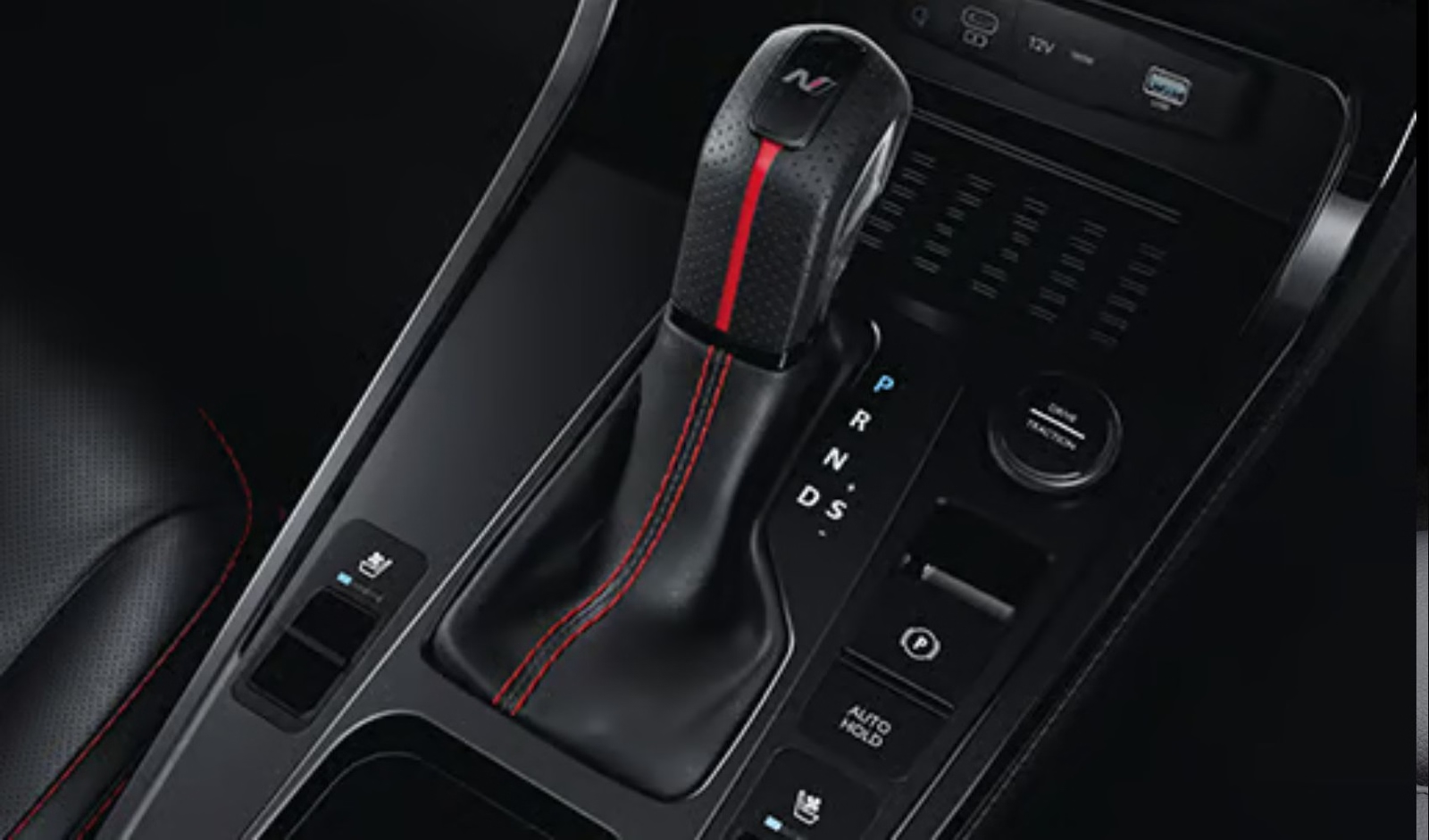
The DCT is the best option for the drivers who like performance and easy gear changes. In this transmission there are two separate clutches- one for odd-numbered gears and one for even-numbered gears. It comes with both dry and wet clutch DCTs. Wet clutches are the main reason to prevent overheating issues in stop-and-go traffic. DCT gearbox problems in India often relate to potential overheating issues in dry clutch variants during prolonged urban driving. Volkswagen's popular version of this technology is known as DSG – Direct-Shift Gearbox. The wet DCT vs dry DCT difference in India is vital for potential buyers. When comparing CVT vs TC vs DCT which is better, DCTs stand out for their sporty feel and efficiency, but their complexity can lead to higher automatic gearbox repair cost India.
Advantage of Dual-Clutch Transmission
Quick Shifts: Very fast gear changes for quicker response
Better Mileage: More efficient than regular automatics
Rapid Power: No power loss during gear shifts
Auto + Manual Mode: Switches to comfort and control
Disadvantages of Dual-Clutch Transmission
Overheating: Clutch heats in stop & go driving
High Repair: Complex system that makes it costly
Sensitive Driving: non regular habits can wear the clutch faster
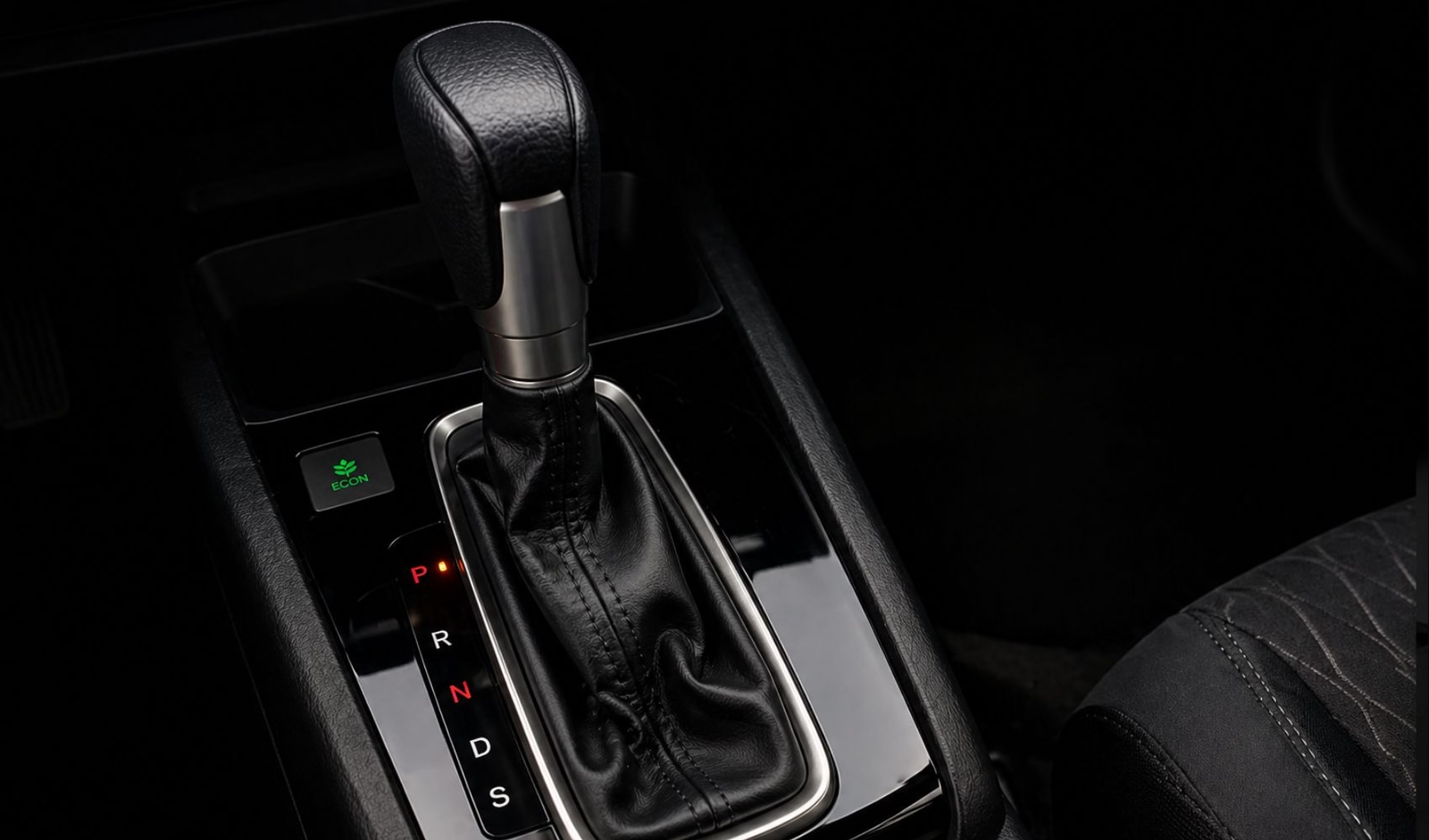
A CVT (Continuously Variable Transmission) is great for smooth and relaxed driving. It doesn’t use fixed gears like other cars. It uses a belt and pulley system to change speeds continuously so you don’t feel jerks while driving.
CVT cars are usually quiet and give good in mileage, especially when you drive calmly in the city. The thing to noticed is a “rubber band effect (The engine sound increases but the car does not speed up instantly).
Overall, a CVT is a good choice if you want comfort, smooth driving, and better fuel efficiency in daily life.
Advantage of the CVT-
Good Mileage: Runs at optimal RPM for better efficiency
Super Smooth: No gear shifts, no jerks
Light & Simple: Fewer parts, lower weight and cost
Disadvantages of CVT-
Drone Noise: Loud humming at high RPM during acceleration
Weak Performance: Not ideal for heavy loads or high power
Less Fun: Lacks the feel of real gear shifts
Other Considerations
We've covered all the main types of gearbox in car, there are other important gearboxes.
In hybrid vehicles, often used an e-CVT gearbox. This is a specialized form of CVT, used for the unique demands of hybrid powertrains.
When trying to decide which automatic transmission is best in India, it is truly difficult for individual preferences, driving habits and budget.
For city driving, CVT or AMT might be ideal. For performance, a DCT is good option. For overall reliability and a balanced approach, a Torque Converter (TC AT) is a good choice.
And if there is a difference between AMT vs CVT vs DCT which is best in India?
AMTs are budget-friendly and fuel-efficient but less refined. CVTs are smooth and good for mileage but feel less engaging. DCTs offer quick shifts and performance but are complex and have higher maintenance costs. The torque converter vs DCT India debate often highlights the TC's smoothness and durability against the DCT's speed and efficiency. If looking for the best automatic car under 10 lakh India 2026, you'll likely find well-tuned AMTs or CVTs, while higher-end vehicles will offer advanced DCTs or TCs.
Understanding the 6 types of car transmission explained helps to make an informed decision. For those asking what are the 4 types of gearbox or 5 types of automatic transmission, the distinction lies in how one categorizes the semi-automatic variants or focuses solely on automatics. While types of gear box PDF or gear box types with images can provide more technical depth, our aim here is practical understanding for the everyday driver. For those interested in industrial applications, industrial gearbox types pdf would be relevant, but for cars, it's about finding which gearbox is best for Indian roads- a balance of efficiency, durability, and comfort.
When it comes to manual vs automatic gearbox India 2026, automatics are undeniably gaining popularity due to their sheer convenience in congested traffic. However, manuals still offer a more engaging driving experience and often come with a lower initial purchase price. The AMT gearbox maintenance cost India is generally lower than more complex automatics like DCTs or TCs, but the automatic gearbox repair cost India can vary significantly depending on the transmission type and the specific issue. And for those curious, DSG gearbox kya hota hai? It's simply Volkswagen's proprietary name for their Dual-Clutch Transmission technology.
Here's a quick overview of car transmission types in India with price considerations:
Transmission | Mileage | Smoothness | Price Range |
|---|---|---|---|
Manual | Highest | Driver-depend | Lowest |
iMT | Good | Moderate | Low-Mid |
AMT | Good | Moderate | Low-Mid |
TC | Moderate | Execellent | Mid-High |
DCT | Good | Very Good | High |
CVT | Excellent | Excellent | Mid-High |
Ultimately, the choice between different transmission types depends on your priorities. Do you value driver engagement and lower cost, or is the convenience of an automatic paramount? Do you prioritize fuel efficiency, or is performance your main concern? With the diverse range of gearbox types with advantages and disadvantages available, understanding each one will empower you to choose the best car to buy with gear or gearless in India that perfectly suits your needs and driving style.
Car Transmissions Explained: Manual vs. Automatic Guide
Gearbox Fluid: What It Is and Why It Matters
Whether you have a manual or automatic, the gearbox needs fluid to stay healthy. In a manual gearbox, the fluid (gear oil) lubricates the gears and bearings. In an automatic — whether AMT, TC AT, DCT or CVT — the fluid also powers the hydraulic system that controls gear shifts. Without it working properly, the gearbox cannot function correctly.
Watch for these warning signs that your gearbox fluid needs attention:
Delayed or jerky gear shifts — Burning smell from under the bonnet — Dark or dirty fluid colour when checked — Gearbox leaking fluid (red or brown puddles under the car) — Grinding or whining noise while accelerating
Gearbox Fluid Change Cost
The gearbox fluid change cost varies depending on the vehicle, transmission type and where you get it done. As a general reference:
Manual gearbox fluid change: typically lower cost, simpler process
Automatic gearbox fluid change: more involved, costs generally range from ₹2,000 to ₹6,000+ in India depending on car and workshop
CVT fluid change: uses a specialised fluid — often more expensive than standard ATF
DCT/DSG fluid change: one of the pricier services due to specialist fluid and procedure
A full gearbox flush cost — where all old fluid is removed and replaced — is typically higher than a simple drain-and-fill, but it is more thorough and recommended if the fluid is very degraded or the car has high mileage.
How Often Should You Change Gearbox Fluid?
Most manufacturers recommend changing gearbox fluid every 40,000 to 60,000 km under normal driving conditions. If you drive in heavy city traffic, do a lot of hill driving or carry heavy loads regularly, a change closer to 30,000 km is advisable. Some newer cars feature sealed transmissions, but even these can benefit from a fluid change around 60,000 miles to maintain shifting smoothness.
CVT gearboxes generally need more frequent attention. CVT-specific fluid changes are sometimes recommended around every 30,000 miles, more frequently than standard automatics. Always follow the owner's manual — using the wrong fluid or missing a service can cause accelerated wear and much larger repair bills.
A simple test: check your gearbox fluid colour. Fresh fluid is usually bright red or light amber and semi-transparent. If it is dark, cloudy or smells burnt, it is time for a change. A puddle of reddish fluid under your car is a sign of a gearbox leaking fluid — get it checked immediately.
AMT vs CVT vs DCT: Which Is Best in India?
This is one of the most searched questions among Indian car buyers.There is no single answer — it depends on where and how you drive.
For congested city traffic: CVT or AMT offer the easiest experience
For long highway drives: Torque Converter AT or CVT work best
For performance and sporty driving: DCT is the clear choice
For tight budgets: Manual or AMT offer the best value
For larger families or SUVs: Torque Converter AT provides smoothness and durability
For those looking at the best automatic car under 10 lakh in India in 2026, well-tuned AMTs and CVTs dominate this segment. Higher budgets open up better DCTs and torque converter options with more refinement.
Manual Gearbox vs Automatic: The Final Word
Automatics are clearly gaining ground in India, driven by increasingly congested urban roads and the availability of affordable AMTs in even entry-level cars. But the manual gearbox still has a loyal following — and for good reason. It costs less, delivers better mileage in experienced hands, and offers a more connected driving experience.
The best choice ultimately comes down to your daily commute, budget and personal preference. If you are frequently stuck in traffic, an automatic of any type will make your life easier. If you drive mostly on open roads and enjoy a hands-on driving feel, a manual is hard to beat.

Written by Team CarBike4U
Editorial & Research Team
CarBike4U's dedicated editorial team researches, reviews, and updates content to bring you the most accurate automotive news, pricing, comparisons, and ownership guidance.