Automotive Blog
Plug-in Hybrid Electric Vehicles (PHEV): A complete guide
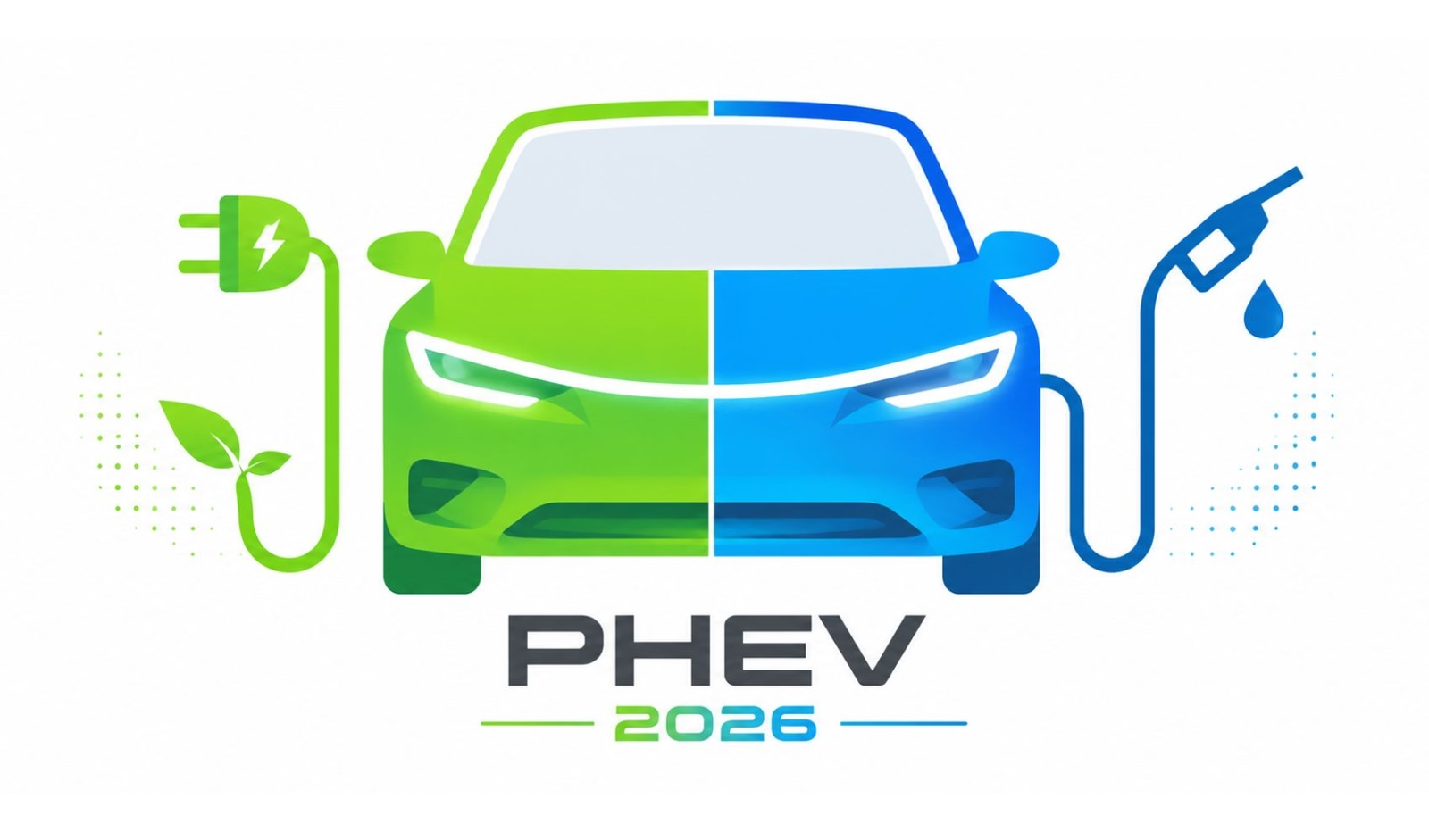
Electric Vehicles (EVs) will change the automotive industry completely because of their unique and innovative technology. But this revolution will take some time, especially in markets like India. Yes, we can say that the popularity of electric cars is increasing everyday still this is not the perfect option for everyone. In this situation, we have an amazing alternative that is PHEV (plug-in hybrid electric cars). These cars are a combination of an electric motor vehicle and a traditional petrol diesel engine. There is a big advantage that you can easily use the electric mode and conventional engine mode according to your convenience, and you can switch between them as per your requirement.
In Simple words, if you are travelling for a short distance, then the car can be run in electric mode to save fuel, and if there is any charging issue, then you can get support from the normal engine. Because of this flexibility, PHEVs are considerable as a practical option, especially for those people who hesitate to buy an EV. In this blog, we will understand what PHEVs are, how it works and what the advantages and disadvantages of these vehicles are.
What is Plug-in Hybrid Electric Vehicles (PHEV)?
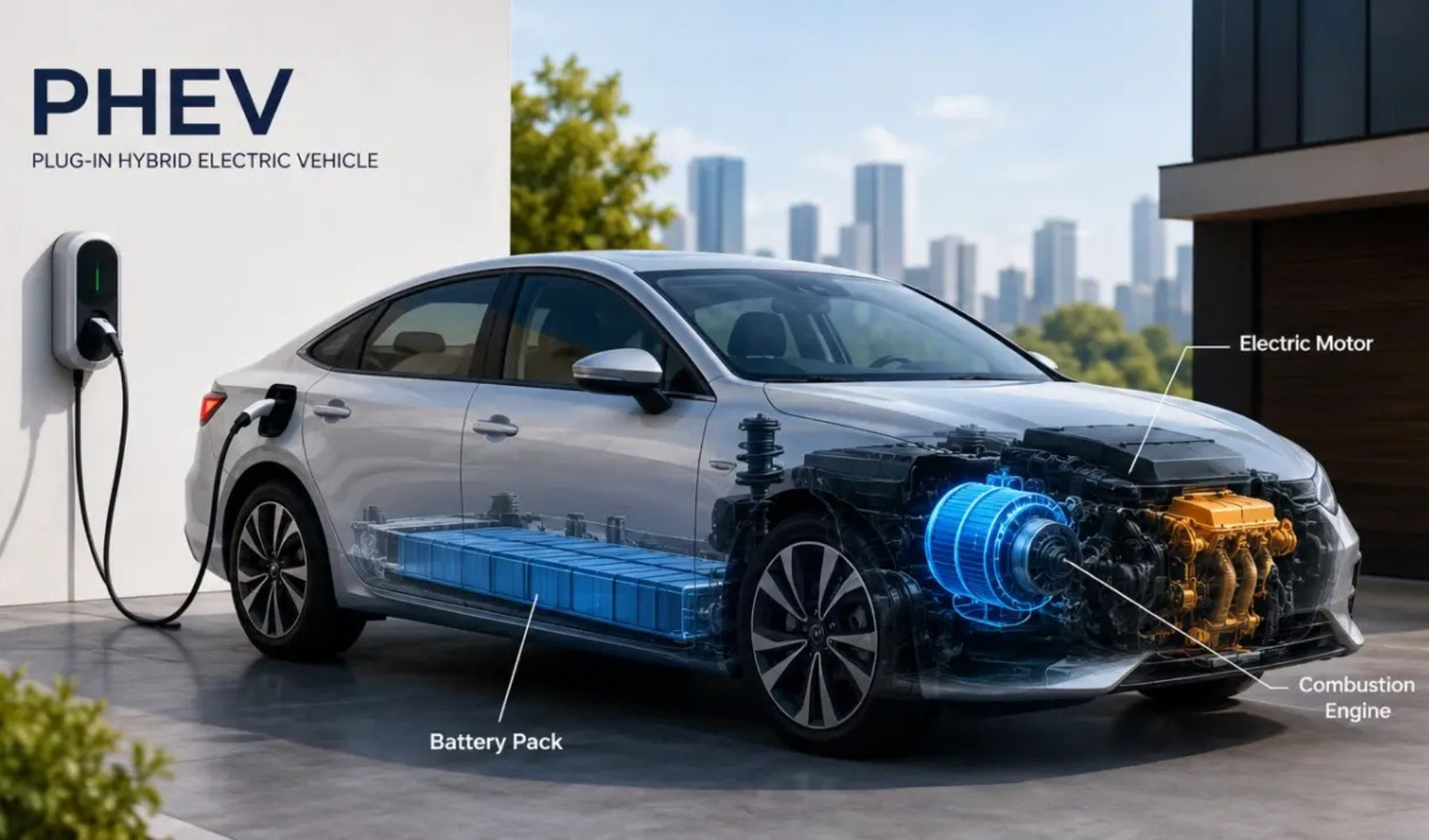
PHEV stands for Plug-in Hybrid Electric Vehicle. These vehicles are a combination of an electric powertrain and a traditional Internal Combustion (IC) engine. These cars have a big battery pack in comparison to normal cars. This helps to work at low speed while driving on electric power only. The battery of the PHEV can be charged through battery regenerating braking and an external power source. While driving at high speed or the battery gets discharged, the petrol diesel engine starts automatically working. This enhances its fuel efficiency and performance. In very simple words, PHEV is like a normal hybrid vehicle, but its battery size is larger, and it has the capability to be driven in fully electric mode with external charging support.
This is why a PHEV is a practical option for those people who are comfortable with the EV option but also require a backup of petrol or diesel option for the safer side.
PHEV Cars in India (2026)
PHEVs (Plugin hybrid electric vehicles) also come in the premium price segment as electric vehicles do. The main reason behind this is its advanced electric technology and big battery pack. This is why there are very few manufacturers in India for PHEV cars.
These are some of the PHEV cars available in India in 2026.
Model | Fuel Type | Price (Ex-Showroom) | Fuel Efficiency* |
BMW XM | Petrol + Electric | Rs. 2.60 crore | 61.9 kmpl |
Volvo XC90 T8 Twin Engine | Petrol + Electric | Rs. 97.90 lakh | 42.0 kmpl |
Best PHEV SUVs in India
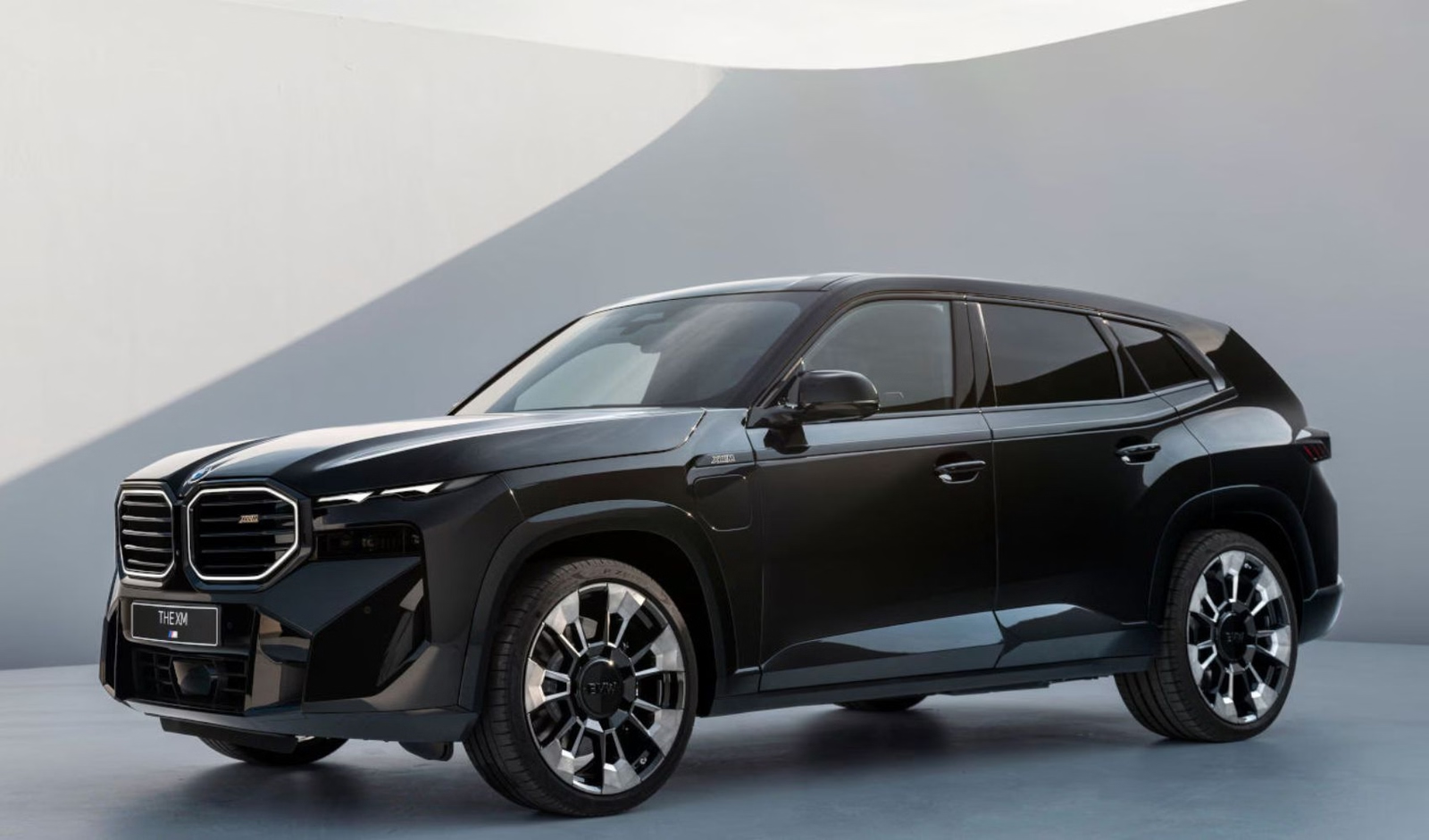
In 2026, there are many options of PHEV in the SUV segment. BMW XM and Volvo XC90 Recharge are the Luxury SUVs which offer both electric and petrol modes with excellent performance and comfort.
Best PHEV Sedans in India

Also in the Sedan category, there were options available. The BMW 7 Series plug-in hybrid and more are available in premium luxury Sedan technology.
PHEV Hatchbacks Cars
In India, most of the hatchback cars are budget friendly. But in hatchback cars, Volkswagen Golf GTE is the option available in hatchback PHEVs looks little expensive according to the segment. Still, there is a small market in India for, and major focus is on strong hybrid and EV cars, but it is increasing day by day.
How does a Plug-in Hybrid Electric Vehicle work?
PHEVs' working system is similar to that of normal hybrid cars, but it has a basic difference in charging flexibility. PHEV can be charged through external sources. This is properly explained in the following points on how plug-in hybrid cars work.
Usually, PHEV cars start in all-electric mode. The electric motor gives power to the electric model.
The car can be run in electric mode till the battery has a charge, which saves fuel consumption and controls pollution.
There are some PHEVs which have a specific feature that, when your car is on high speed and cruising speed, automatically switch to hybrid mode. In this mode, the IC engine and electric motor both works together.
In PHEVs, when your car's battery is almost discharged, the internal combustion engine gives power to the vehicle, and it starts working like a normal petrol/ diesel car.
This PHEV battery can be charged through external sources similar to EV cars.
Another way to charge this battery is regenerative braking, which means when you use the brake, the energy generated while braking is converted to electricity and stored in the battery.
There are some situations where an IC engineer helps to recharge the battery.
There is a simple example that if you are travelling in a city, then most of the time the car will run on electric mode. When driving on highways, and your battery gets discharged, it automatically switches to the petrol engine. This is the reason that PHEV is the perfect combination of EV cars and conventional cars.
Types of Plug-in Hybrid Electric Vehicles (PHEVs)
There are mainly two types of plug-in hybrid electric cars:
1. Series Plug-in Hybrid
In these types of configurations, the vehicle is to be driven in electric mode, and the car runs on electric mode only until the battery is discharged. Here, the petrol diesel engine didn't give power to the wheels directly when the battery got discharged. The work of the engine is to regenerate the electricity only, and while driving at low speed over short distances, this car can be run without using fuel.
2. Parallel Plug-in Hybrid
In this type of setup, the electric vehicle and conventional vehicle both work together to give power to the vehicle in almost every condition. The vehicle can be drive on all electric mode at low speed, and for high speed and heavy acceleration, both the engine and electric motor work together for better performance and efficiency.
Key Components of a Plug-in Hybrid Electric Vehicle (PHEV)
PHEV has such important components which helps in driving the vehicle efficiently. Below you can read more about the same.
1. Electric Motor
Electric motor is the most important part of the PHEV, which runs the vehicle on pure electric mode. There are some situations where an electric motor gets power from the internal combustion engine.
2. IC Engine (Internal Combustion Engine)
This is a normal petrol diesel engine which helps to give the power to the vehicle when battery got discharged. There are some PHEVs where it helps to charge the battery and give power to electric motors.
3. Battery Pack
In PHEV, there are mainly two types of batteries. One is a Traction Battery, which gives power to the electric motor, and another is an Auxiliary Battery, which gives power to the other components of the car, such as lights, infotainment system, etc.
4. Onboard Charger
In PHEV, is on board Charger is very important for battery charging. This helps to convert the easy electricity to DC, and simultaneously it monitors the charge status of battery voltage and temperature.
5. Generator
PHEV cars have a generator which helps to generate electricity through IC engines. There are some electrical motors that also work like a generator, and while breaking, you can charge the battery by converting kinetic energy into electrical energy.
6. Transmission
The transmission, or gearbox, delivers power to the wheels; without it, the engine and electric motors are not engaged. A PHEV also utilises a conventional transmission, similar to standard petrol or diesel vehicles.
7. Charging Port
The charging port of the car helps to connect with the external power source. It has a charging cable which connects the charging port to the power source. Power sources can be a household socket or a dedicated charging station.
8. Fuel Tank
The fuel tank stores the fuel for the IC engine. When the battery is discharged at that time, engine fuel helps to run the vehicle. That is why the fuel tank is an important component of PHEV.
PHEV: Advantages and Disadvantages
You clearly know what the PHEV is and how it works, but now we will see the pros and cons of the plug-in hybrid electric vehicles
Advantages of Plug-in Hybrid Electric Vehicles (PHEV)
1. Zero Emissions in Electric Mode
While driving the pH EV car in pure electric mode at that time, it produces zero tailpipe emissions, which helps to reduce pollution
2. Less Carbon Emissions
In the comparison of conventional petrol and diesel cars, the PHEV produces fewer carbon emissions
3. Better Fuel Efficiency
When you drive the PHAV car in the city, the electric motor supports the engine, which reduces the consumption of fuel
4. Low Running Cost
If you travel daily for short distances, then electric mode helps to reduce the expenses of fuel, and it works on a low running cost
5. No Range Anxiety
In the PHEV cars, there is no tension of charging like normal EVs because the battery supports and provides backup to the battery with the help of an IC engine, and this helps to cover the long journey easily.
Disadvantages of Plug-in Hybrid Electric Vehicles (PHEV)
1. Expensive Price
PHEV cars are more expensive than normal petrol, diesel, or standard hybrid cars.
2. Highway Fuel Efficiency
While driving on the long highway trip, PHAV cars provide fuel efficiency similar to conventional cars
3. Battery Performance Degradation
Over time, if the battery health reduces, it also affects the electric performance.
4. Charging Time
It can be time-consuming for the charging. It totally depends on the charger type.
5. High Repair Cost
Electric power train or better related repairs can be more expensive and incur higher repair costs.
How to charge a plug-in hybrid car?
The charging process of PHEV vehicles is similar to that of electric cars. You just have to connect the charging cable from the power source to the charging port.
Home Charging Steps
Step 1:
Charging cable ko household power outlet mein connect karein. Usually, a normal 3-pin socket is used.
Step 2:
Connect the charging cable to the household power outlet. It usually has a normal three-pin socket.
Step 3:
Locate the vehicle's charging port and ensure it is easily accessible.
If you have installed the dedicated charging station at your home, then you have to connect the charging connector of the vehicle to the charging port, and your battery starts to be charged automatically.
You can also charge your PHEV car on public charging stations but ensure that the charging connector is compatible with your vehicle. You have to connect the charging plug to the charging slot of your vehicle, and after completing the charging, you can pay for the consumed electricity.
Difference between PHEV and BEV (Battery Electric Vehicles)
Refer to the table below to gain a comprehensive understanding of PHEVs and BEVs. We have made a thorough comparison between these two types of vehicles, clearly outlining the key differences between pure electric and plug-in hybrid cars.
Parameters | PHEVs | BEVs |
Working principle | An electric motor and an IC engine work independently or in tandem to propel the vehicle. | An electric motor propels the vehicle. |
Electric range | The pure electric range is limited or less than that of BEVs due to a smaller battery pack. | Since BEVs rely on pure electric power, they comprise larger battery packs. Hence, the electric range is greater than that of PHEVs. |
Emissions | They produce lower carbon emissions than conventional petrol/diesel cars. | They produce zero tailpipe emissions. |
Charging time | Since the battery packs are smaller in size, the charging time reduces. | BEVs have larger battery packs. Hence, the charging time increases. |
Running cost | High | Low |
Vehicle price | Expensive but costs less than BEVs. | Expensive |
Difference between PHEV and HEV
To gain a clearer insight into the differences between PHEVs and HEVs (Hybrid Electric Vehicles), please refer to the table below. It will help you make informed decisions.
Parameters | PHEVs | HEVs |
Working principle | An electric motor and an IC engine propel the vehicle, wherein they can operate independently or in tandem. | An electric motor assists the conventional IC engine in improving fuel efficiency or performance. |
Electric range | Limited | Typically, an HEV cannot operate in pure electric mode. However, some HEVs do offer pure EV mode at slow speeds for limited distances. |
Emissions | They produce lower carbon emissions compared to petrol and diesel cars. | Lower carbon footprints compared to conventional vehicles. |
Charging | They need to be plugged into an external power source to charge the battery pack. | No need for charging, since the battery pack gets charged within the vehicle via regenerative braking or a generator. |
Battery pack | They comprise larger battery packs. | HEVs come with smaller battery packs. |
Running cost | Low | High |
Vehicle price | More expensive than HEVs. | More affordable than PHEVs. |
Upcoming Plug-in Hybrid Cars in India
It is already being discussed that India already has the PHEV segment, but in the overall market, it’s below in the comparison. There many plug-in hybrid cars in the Indian market, the main reason is that most of the automobile companies are now investing in direct electric vehicles and PHEVs. But in the future, these companies can explore the plug-in hybrid segment, named as Volvo, BMW, Toyota, and Hyundai. In the coming years and near future, if the charging infrastructure and government support for the electrical and PHEVs improve in India, the PHEV vehicles are increasing rapidly.
How do PHEVs impact the environment?
If we talk about the PHEV cars, and how it impacts the environment. The most advantageous thing it uses less carbon emission. As we all know, vehicles are the major reason for environmental pollution nowadays, and plug-in hybrid vehicles help reduce pollution and play a very important role in this scenario. There are some environmental benefits of PHEV, such as it has bigger battery packs which use pure electric mode, resulting in zero tailpipe emissions.
Even in the hybrid modes, it produces less carbon emission in comparison to conventional petrol diesel cars, and because of the lower fuel consumption, fossil fuel dependency also reduces overall. If we see that a pure EV is not possible, then PHEVs ' environment-friendly transportation is a strong alternative.

Written by Team CarBike4U
Editorial & Research Team
CarBike4U's dedicated editorial team researches, reviews, and updates content to bring you the most accurate automotive news, pricing, comparisons, and ownership guidance.