Automotive Blog
Jawa 42 Review After 3 Years & 25,000 Km: Real Mileage, Problems, Top Speed & 2026 On-Road Price
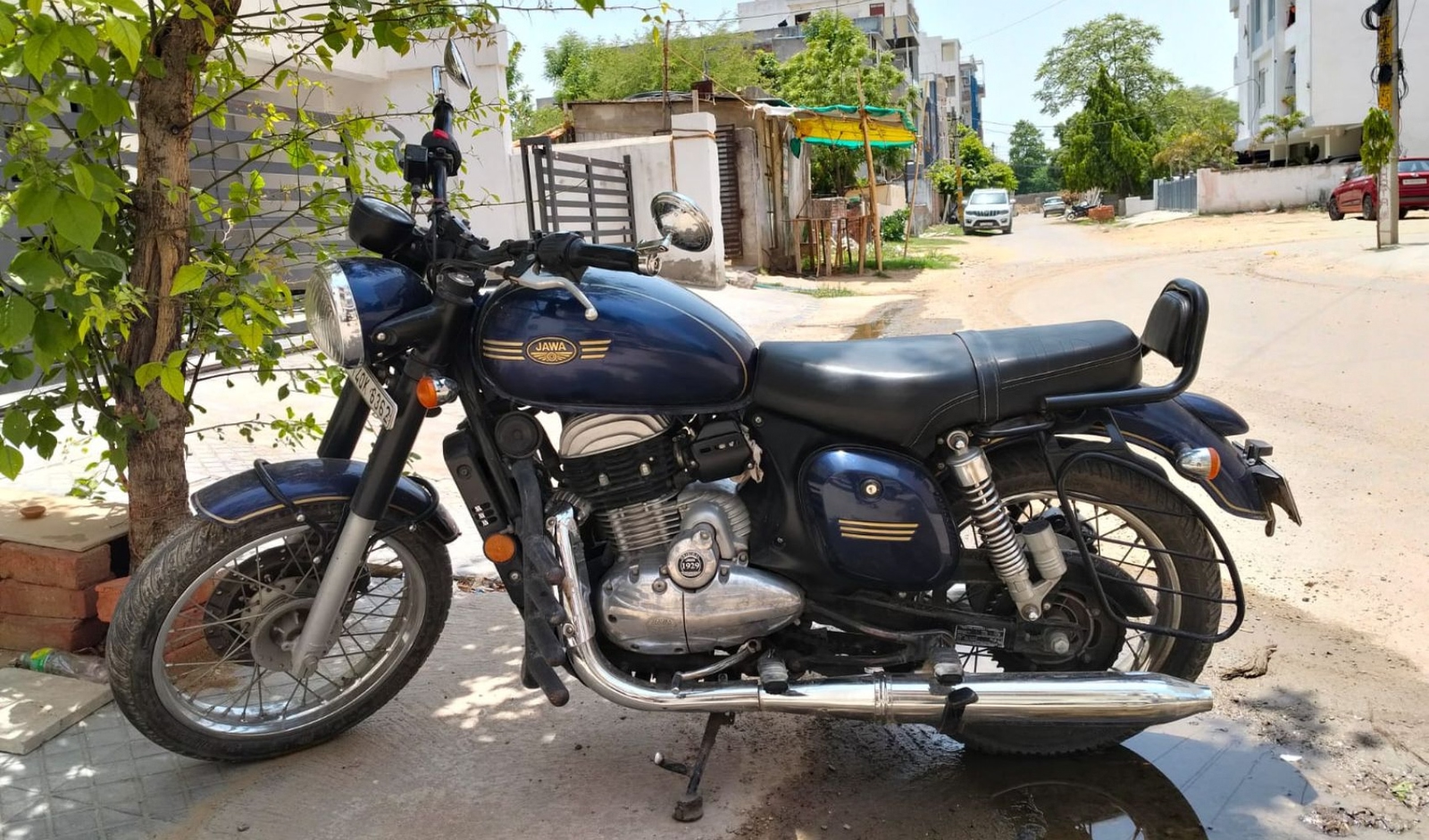
I walked into the showroom in late 2023, and the Jawa 42 in its nebula blue just stared back at me. At that time, the Jawa 42 on road price in my city was hovering around ₹2.10 lakh, a figure that felt fair for the kind of character this machine promised. It wasn’t the fastest bike on paper, nor the most practical. But the way that sculpted tank caught the light, the throaty idle of the 293cc engine, and the sheer retro-modern vibe – I was sold. Fast forward to today, three years and a healthy odometer reading later, the Jawa 42 2026 iteration may have arrived with subtle refinements, but my 2023 model has aged gracefully. This isn't a spec-sheet review. This is my unfiltered, real-world ownership story of the Jawa 42 – the brilliant bits, the searing heat, and the pinching service bills.
If you’re searching for a Jawa 42 long-term review, Jawa 42 mileage, or Jawa 42 common problems, grab a coffee. You’ll find everything here.
The Addictive Performance and Pickup
Let’s start with the soul of this motorcycle – the engine. The 293cc, single-cylinder, liquid-cooled motor produces about 27 PS and 27 Nm of torque. On paper, it’s modest. On the road, it’s magic. The pickup is, in a word, excellent. Crack the throttle open at 3,000 RPM in second gear, and the bike lunges forward with a strong mid-range that punches way above its weight. In city riding, you’ll rarely need to downshift. The torque is beautifully spread, letting you lazy around at 40 km/h in fourth gear and then surge ahead without a hiccup. This makes the daily commute effortlessly quick and, frankly, addictive.
On the highway, the story remains engaging. Cruising at 100-110 km/h feels relaxed, with enough reserve power for quick overtakes. Open stretches let you nudge the Jawa 42 top speed of around 135 km/h, though the engine feels truly at home between 90 and 110 km/h. The 6-speed gearbox helps it settle into a comfortable stride, although I’ll touch on a significant gear-shifting issue shortly. The exhaust note deserves a special mention – a deep, bassy thrum that turns into a purposeful growl as the revs climb. It’s not loud enough to annoy, but characterful enough to make you skip the radio every time.
Mileage That Pleasantly Surprises
Given the punchy performance, I braced myself for thirsty fuel bills. Yet, the Jawa 42 mileage has been a genuine surprise. Over three years and careful tracking, my bike consistently delivers around 30 km/l in city conditions and an impressive 35 km/l on highways if I keep the throttle steady around 90-100 km/h. For a 300cc engine, this is commendable. The 14-litre tank thus translates to a real-world range of 420-490 km, which means fewer fuel stops on long rides. This balance of sprightly performance and decent fuel economy is a key reason why I still grin every time I ride it.
Seating Posture and Comfort: A Long-Distance Ally
I cannot praise the Jawa 42 seating posture enough. The slightly rear-set footpegs and a wide, flat handlebar give you a stance that’s commanding but not committed like a full-fledged sportbike. It’s a neutral, upright yet engaging posture. I’ve done back-to-back 400 km days, and my wrists and lower back remained complaint-free. The seat cushioning is adequate for the first couple of hours, after which you’ll want a short break.
The pillion seat, however, is a different story. It is small, firm, and perched quite high. My partner tolerates it for short city hops but flatly refuses anything beyond 50 km. This is a rider’s bike, through and through. The suspension, a telescopic front fork and twin rear shocks, is set up on the stiffer side. This rewards you with fantastic high-speed stability and confident cornering but transmits sharp potholes directly to your spine. It’s a trade-off I’m willing to accept for the way this motorcycle carves through ghat roads.
Jawa 42 vs Royal Enfield Hunter: The Cross-Shop Dilemma
Back in 2023, the battle in my head was fierce: Jawa 42 vs Royal Enfield Hunter. Both are stylish neo-retro roadsters in a similar price bracket, but they feel completely different. I spent hours test-riding the Hunter 350. It was more relaxed, had an even more effortless low-end thump, and a lower seat height that inspired confidence. However, the Jawa 42 felt quicker, sharper in the corners, and its exhaust note had a crisp, sporty snarl. Where the Hunter excels in relaxed cruising and a vast service network, the Jawa fights back with its superior top-end rush, a liquid-cooled engine that doesn’t feel breathless when pushed, and a riding posture that makes you feel like you’re piloting something special rather than just commuting. If you value heritage, a cushy ride, and peace of mind on maintenance, the Hunter is hard to ignore. But if you want a more engaging, slightly aggressive machine with a higher-revving character and a distinctively sporty heart, the Jawa 42 remains the more thrilling choice. Three years later, I still prefer the 42’s theatre on wheels.
The Dark Clouds: The 3 Big Issues I Face
No ownership story is complete without the scratches. And the Jawa 42 has left a few deep ones, particularly in my wallet and patience.
1. Service and Maintenance Costs: The Pinch is Real
This is my single biggest gripe. The Jawa 42 service cost is too expensive for a motorcycle in this segment. Routine service intervals every 5,000-6,000 km typically set me back anywhere between ₹3,500 and ₹5,500 at authorized centers. A basic oil change with the recommended liquid-cooled engine oil isn't cheap, and add to that the cost of chain maintenance, brake pads, and periodic coolant top-ups. Even now, when I check the latest Jawa 42 price and ownership forums, the maintenance cost story hasn’t changed drastically for the newer Jawa 42 2026 models either. Spares remain pricey, and the uneven service experience across cities can make you feel the pinch sharply. Finding a trustworthy independent mechanic who understands the liquid-cooled Jawa motor is also a challenge, locking you into the expensive authorized network. If you’re budget-conscious about Jawa 42 maintenance cost, keep a dedicated fund ready.
2. Overheating: A Slow Roast in Traffic
This is not a myth. The Jawa 42 overheating issue is real, especially in stop-go city traffic. The liquid-cooling does its best, and the radiator fan kicks in diligently, but on a hot summer afternoon, the heat thrown onto your legs can become seriously uncomfortable. The engine temperature gauge climbs swiftly, and you can feel the frame itself soaking up warmth. On open roads, it’s perfectly fine, but for a daily city commute in peak traffic, be prepared to feel like you’re slow-roasting. Wearing thick denim or riding pants becomes non-negotiable in summer.
3. Hard Gear Shifting: A Stubborn Gearbox
This issue tested my patience the most. The Jawa 42 hard gear shifting problem, particularly finding neutral at a standstill and the notchy feel between 1st, 2nd, and 3rd gears, has been a constant companion. Initially, I attributed it to the break-in period, but 25,000 km later, it persists. I’ve experimented with adjusting the clutch cable play, using fully synthetic engine oil, and even getting the clutch assembly inspected. It improved slightly but never became the slick, butter-smooth gearbox I’ve experienced on other bikes. Finding neutral often requires a saint’s patience and a precise, gentle toe-tap. Hard acceleration occasionally brings a vague, clunky shift, robbing an otherwise lovely riding experience of some polish.
A Quick Look at the Current Numbers
For those wondering how things stand today, the Jawa 42 on road price for the 2026 version now sits close to ₹2.25 lakh, depending on the city. The ex-showroom Jawa 42 price has seen a mild bump over the years, but you still get that unique liquid-cooled motor, dual-channel ABS, and the signature retro-modern styling that turns heads. While the Jawa 42 2026 model boasts minor cosmetic and ergonomic tweaks, the core character — including that addictive pickup and the same 27 PS output — remains unchanged. And yes, the Jawa 42 top speed of around 135 km/h is unchanged too; it’s still a fast-revving, playful roadster that loves an open stretch.
Verdict: Do I Regret Buying the Jawa 42?
Not for a heartbeat.
Despite the searing heat, the hefty service bills, and the stubborn gearbox, this motorcycle delivers something many flawless bikes can’t—character. Every ride feels like an occasion. The breathtaking looks still draw admiring glances. The punchy, responsive engine and class-leading pickup make the daily grind exciting. The excellent highway mileage and comfortable riding posture make it a capable touring companion.
Would I recommend it? Absolutely, but with eyes wide open. This is not an appliance; it’s a passionate machine with quirks. If you are searching for a Jawa 42 review 2023, a Jawa 42 on-road review, or genuine Jawa 42 ownership experience, know this: you buy a Jawa not in spite of its imperfections, but accepting them as part of a package that wears its heart on its fuel tank. Go test ride one. Feel that mid-range surge. And when you’re cross-shopping, weigh the Jawa 42 vs Royal Enfield Hunter carefully — pick the soul that speaks to yours. For me, the love affair continues. I’ll just make sure I’m wearing my thickest jeans on a summer traffic day.
FAQs:
1. What is the real-world mileage of the Jawa 42?
In real-world conditions, the Jawa 42 delivers 30 km/l in city traffic and a solid 35 km/l on highways if ridden between 90–100 km/h. The Jawa 42 mileage is surprisingly efficient for a 293cc liquid-cooled motor.
2. What is the Jawa 42 on-road price in 2026?
The Jawa 42 on road price in 2026 hovers around ₹2.25 lakh, varying slightly by city due to RTO charges and insurance. The ex-showroom Jawa 42 price has seen a modest increase over the years but remains competitive in the neo-retro segment.
3. What is the top speed of the Jawa 42?
The Jawa 42 top speed is approximately 135 km/h on a flat stretch. While it can touch that number, the engine feels most relaxed and vibe-free between 90 and 110 km/h, making it a comfortable highway cruiser.
4. How does the Jawa 42 compare to the Royal Enfield Hunter 350?
The Jawa 42 vs Royal Enfield Hunter debate centers on character. The Hunter 350 offers a relaxed, thumpy ride, lower seat height, and a wide service network. The Jawa 42 counters with a quicker, sportier motor, liquid cooling, and a higher-revving, engaging nature. If you want old-school charm and peace of mind, pick the Hunter. If you crave performance and a sharper riding experience, the Jawa 42 wins.
5. Is the Jawa 42 comfortable for long rides?
Yes, the Jawa 42 seating posture is a highlight—slightly sporty yet upright, with wide handlebars that keep your back and wrists happy for 300–400 km days. The firm suspension and small pillion seat do limit comfort over extremely long hauls or two-up touring.
6. What are the common problems with the Jawa 42?
The most reported issues include engine overheating in heavy traffic, hard gear shifting especially finding neutral, and high service costs. These quirks are well-known in the owner community and are something you learn to live with.
Unique FAQs (From an Owner’s 3-Year Diary)
7. Why is the service cost of Jawa 42 so expensive?
The Jawa 42 service cost is steeper than most 300cc rivals because it uses liquid-cooled engine oil, requires periodic coolant checks, and genuine spares are priced at a premium. A routine service typically runs ₹3,500–₹5,500 at authorized centers, and independent mechanics familiar with the platform are still rare, locking you into the network.
8. Does the Jawa 42 really overheat, and how do you manage it?
Absolutely. The Jawa 42 overheating issue is real—in bumper-to-bumper city traffic, the engine throws noticeable heat onto your legs, and the temperature gauge climbs quickly. To manage it, I always wear thick jeans or riding pants in summer, keep the radiator fins clean, and avoid unnecessary idling. On open roads, the problem disappears entirely.
9. How can I fix hard gear shifting on the Jawa 42?
The Jawa 42 hard gear shifting is stubborn. After years of tinkering, I found partial relief by:
Adjusting the clutch cable to minimal free play.
Switching to fully synthetic 10W-50 engine oil.
Getting the clutch assembly inspected and cleaned regularly.
Finding neutral still needs a gentle, deliberate toe-tap—a quirk that becomes muscle memory over time.
10. What’s new in the Jawa 42 2026 model compared to older ones?
The Jawa 42 2026 update brings subtle styling tweaks, new colour options, and mild ergonomic refinements. Mechanically, the 293cc liquid-cooled engine remains unchanged—same power, torque, and addictive pickup—so the ride experience is very close to the 2023 model you’ve read about here.
11. Is the Jawa 42 a good buy in 2026 for a first-time 300cc rider?
Yes, if you value character over clinical perfection. The responsive pickup, manageable Jawa 42 mileage, and engaging dynamics make it exciting for an upgrade from a 150–200cc machine. Just be prepared for the quirks—heat, gearbox stiffness, and the premium Jawa 42 on road price are all part of the deal. Test ride both this and the Royal Enfield Hunter to see which soul speaks to you.

Written by Team CarBike4U
Editorial & Research Team
CarBike4U's dedicated editorial team researches, reviews, and updates content to bring you the most accurate automotive news, pricing, comparisons, and ownership guidance.