Automotive Blog
What is the Difference Between EV Vs Diesel Vs Petrol Cars?
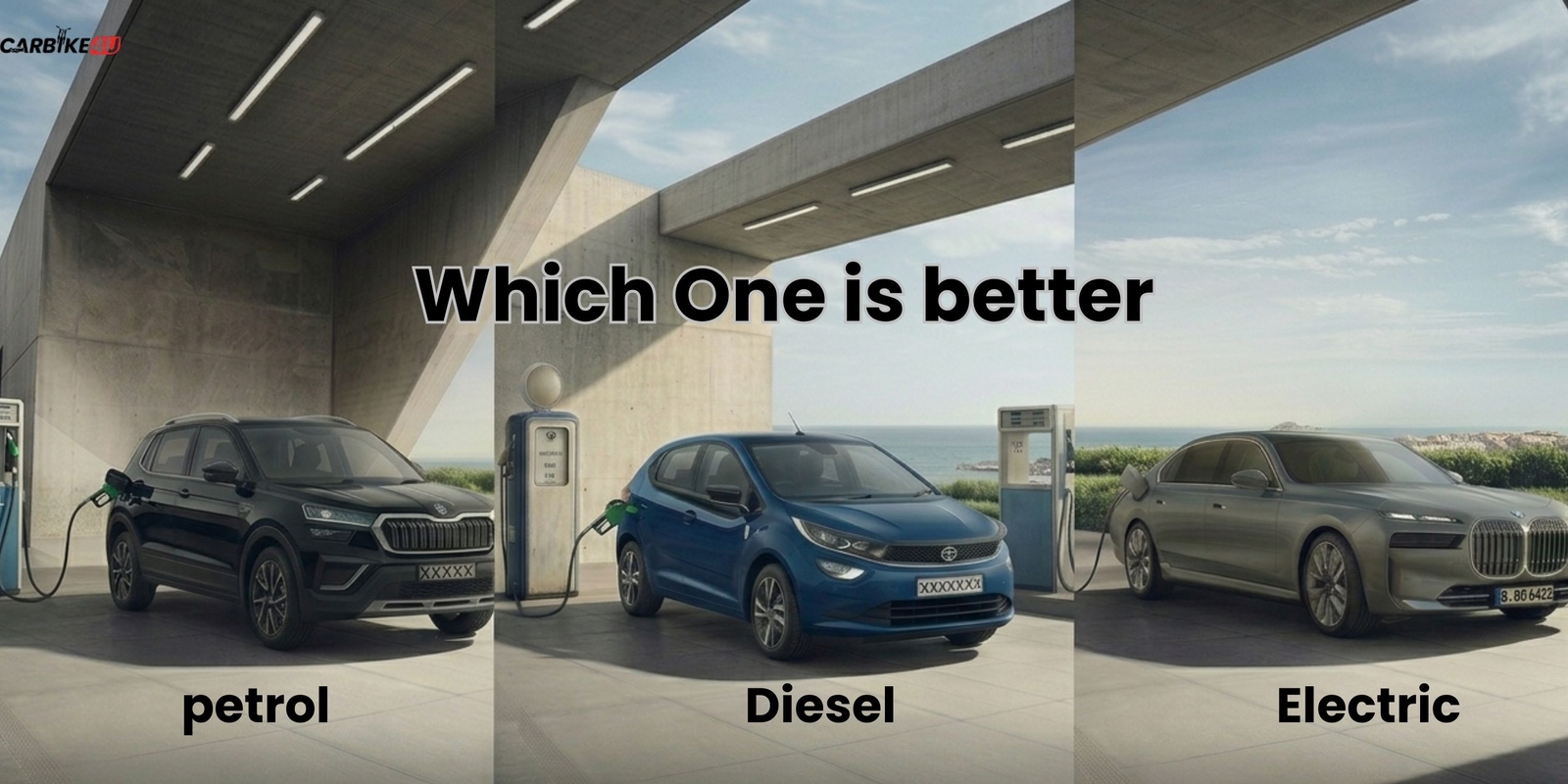
Every time you stop at a petrol pump station, the harsh reality of increasing petrol and diesel prices hits you right? Decades ago, the choice between petrol and diesel cars was simpler: petrol for small cars and diesel for higher mileage. However, in the early 20s, EVs are now making a strong impact on reducing pollution and a smart digital driving environment.
Thus, when choosing between a diesel, petrol or EV, you must always think about the driving, environment, purchase price and fuel efficiency. As the industry grows, the debate between choosing EV for reducing fossil fuels, diesel for long-distance driving and petrol for lower upfront cost continues for buyers to make a suitable choice. Hence, this blog guides into a detailed difference between petrol, EV and diesel based on different factors. Let's find out what the current and future state of all three options are.
EV vs Petrol vs Diesel — Complete Comparison
India 2026
Earlier, buying a car was very easy, just visit the showroom, select your favorite model and pay the full and final amount. However, in the era of 2026, the decision of buying a car is more complex. Today’s car models are spoiled with fuel options such as electric car , petrol, and diesel. So, which one suits your needs best? Confused, aren’t we? Relax, we'll walk you through this section, which involves a breakdown of all three categories, to make the best decision. Moreover, if you want to learn about the difference between petrol and diesel cars, then read our blog:
Table of content | EV | Petrol | Diesel |
Cost of Running | Low running cost {₹0.88–₹2.0 per km} | Higher running cost (₹6.0–₹8.0/km) | Moderate running cost (₹4.0–₹5.5/km) |
Maintenance | Lowest-maintenance | Regular servicing | More frequent/ regular servicing |
Cost of Purchase | Higher starting price. [₹14–16 lakh] | Lowest starting price [₹7–8 lakh] | ₹1-3 lakh higher cost than petrol cars |
Fuel Efficiency | 3–4 miles per kWh in 85–90% of energy. | 15–20 kmpl in ARAI range. | 23-25 kmpl ARAI range. |
Driving Experience | Best for city & short travel- 300-500 km. | Smooth city driving performance. | Best for highway & long distance- 700-900 km. |
Environment Impact | Zero tailpipe emissions & environmentally friendly. | Less NOx emissions, but higher CO₂ per liter. | Higher NOx emissions- major impact to Delhi. |
Resale Value | Uncertain — depends on battery updates. | Higher resale value— low depreciation. | Unstable — depends on diesel market prices & engine updates. |
Noise and Vibrancy | Completely Silent - no fuel, engine, or exhaust controls | Lower engine noise and vibrancy. | It is very noisy during cold starts in winter. |
What are the Pros and Cons of Different Fuel Types?
Hopefully, the difference between EV, petrol, and diesel is clear. It also helps to clear that there is no single best choice for everyone. According to the pros and cons of fuel types, this decision might take a turn. Therefore, to help you with clear decision-making between which fuel car is best for you, we'll walk you through EV, petrol and diesel car pros and cons.
1. EV Car Pros and Cons
Pros of EV | Cons of EV |
Starting with one of the crucial benefits, EV cars require minimal maintenance and service. Since it does not include oil, filters, and a few components, it saves on servicing costs. | One of the reasons why EV growth is still questioned is the purchase price. It involves a higher starting price, as compared to other fuels. |
These vehicles are very convenient; you can charge the EVs from the comfort of your home at any time. The government and numerous agencies are encouraging buyers to buy EV cars to reduce pollution. Moreover, it helps to create an eco-friendly environment and offers rebates and | The charging takes a lot of time. From 20-80% battery, you need to wait for 30 minutes only, if it is fast charging stations. It delivers a very low range between 90 and 190 km per battery charge. This is why, for long-distance commuters, EVs are not a suitable choice. |
EVs help reduce harmful gases, emissions, and carbon footprints by turning into a digital driving system. The power assumption of fuel is changed with the battery system. | EVs are still not upgraded with a wide range of choices. It still offers very few options, all of which are under budget. |
Electric vehicles save 59 to 62% of the battery in the car engine to move the car forward. EVs make a subsequent use of the battery. | The batteries of EV cars are very costly. Sometimes, lower quality reaches its minimum age faster. It decreases capacity, performance and range, and replacement of such a battery makes a huge impact on the pocket. |
2. Pros and Cons of Diesel
Pros of Diesel | Cons of Diesel |
1. Diesel cars reduce fuel expenses for long-distance travelers, such as highway or weekend trip commuters. It offers higher fuel economy and mileage compared to other engines. | 1. Diesel engine cars produce higher amounts of emissions, pollution and nitrogen oxides, which are extremely harmful to our environment. |
2. Diesel cars are often selected for stronger durability as the lifespan of such engines is longer. This is why many audiences prefer it for long-term ownership. | 2. The servicing and maintenance costs of diesel cars are higher in comparison to petrol cars because of complex parts and advanced technology. |
3. Higher resale values than petrol cars. However, it should be well-maintained and sold at the most trusted site. Many of the customers have sold their used car at the carbike4u platform, one of the most trusted sites. | 3. The noise and vibration in the engine is very loud and irritating, making it challenging for long-distance travellers. |
4. Larger torque in diesel cars allows for heavy loads and comfortable passenger seating without the fear of overload. | 4. The purchasing price of diesel cars is higher, while their maintenance costs are also higher. |
3. Pros and Cons of Petrol
Pros of petrol | Cons of petrol |
1. Petrol stations are available in every district, area, and globally. So, refueling takes less than 5 minutes and it is easier to find the station. | 1. The petrol fuel prices are dynamic; they can go up and similarly fall under different circumstances. Like the global war pandemic, March 2026. |
2. The upfront cost of petrol cars is lower and more affordable, especially for budget-conscious buyers. | 2. The government is not allowing any reward, future policies or offers on petrol cars. So, in the future, there might be a downgrade of these cars. |
3. The maintenance and repair costs are also affordable. It includes a simple design, fewer complex parts, and readily available components at every automobile store. | 3. It is proven that petrol cars impact the environment through higher emissions and pollution. |
4. Whether you are driving in hot, cold or spring weather, the petrol engines are not affected by any such weather conditions. | 4. The demand for petrol cars will decrease over time. It is due to low torque, fuel efficiency, and shorter engine life. |
What are the Future Trends of Petrol, EV and Diesel Cars?
Predicting the future with guesswork is almost impossible, like counting stars. No one knows what will happen in the future. But we can look for current situations and conduct research on what is going to happen. We know that, in future, cars will become more efficient by reducing emissions and pollutant gases. Moreover, with the updated technology, the EV cars can have a strong impact on the current development stage of petrol and diesel cars. So, as discussed, there are many potential outcomes, but let's find out what the possible future trends are working in EV, petrol and diesel cars.
1. Electric Vehicle
India's EV journey is accelerating at a higher speed. Earlier, the hesitation of buying an EV was because of the higher purchase price, but in the future, the prices are expected to drop by 25%, shared by companies like Tata and OLA. According to our research, not only are prices reducing, but 20+ car models are upgrading. From Maruti to Mahindra XEV9e, now you have better options at your fingertips. According to updates, the EV vehicles will have a massive growth of 117 billion by 2032. Thus, based on the Government plans, by 2030, private EV cars will grow by 30%, and globally commercial vehicles include 70%.
2. Petrol Cars
This is a fact reality, with the upcoming EV trends, petrol car companies are creating better, clearer and more efficient vehicles. While petrol engines are still very important for people who do not own EVs due to the unavailability of stations in certain areas. Therefore, petrol cars in future will remain helpful for many audiences.
3. Diesel Cars
Diesel cars are suitable for 1500-2000 km range, long-distance and highway commutes. The government has also introduced strict emission rules. With the increasing pollution from these cars affecting the environment, banning diesel cars in 2027 is 50% likely to be true. But, as of now, the government is encouraging the future to become clearer, and less polluted by avoiding, either by upgrading diesels or completely banning them.
How to Choose the Right Car Fuel Type?
Hopefully, you have understood the upcoming updates in petrol, EV, and diesel cars. But here is one question: have you understood which fuel type is best for you? Every buyer is different; for a Jaipur computer driver, the priority will be far different from that of Mumbai's busy lane drivers. Therefore, this section highlights every single consumer’s needs, and helps in making a suitable choice.
1. City Commuters
Irritated with heavy traffic, messy roads and very limited parking spaces, EVs are the best fit in such conditions. It helps to save 80% fuel cost, only when you fully charge your EVs from home, and drive comfortably in the city.
2. Highway Commuters
Choosing diesel cars with higher mileage ability for long-distance highway commuters is a suitable decision. Apart from this, if you have heavy loads to carry, then these cars are equipped with strong torque. It makes it easy to handle heavy luggage without overloading fear and delivering maximum comfort.
3. Eco Conscious
If you are someone who loves to protect the environment from harmful emission gases and lower pollution, then you can rely on premium EV cars. The modern electric vehicle has now advanced features and a maximum digital driving experience.
4. Long-Term User
For long-term ownership of around 5+ years, EVs are the best choice to make. The modern EV cars are consequently impressing buyers with their lower running costs. Further, it is also practical, reducing pollution and emission gases and offering long-term quality, with an advanced battery system.
5. Short-Term User
If your priority focuses on buying a car for 1-3 years, lower upfront cost, depreciation, and again higher resale value, then petrol cars grab the most attention.
6. Budget Buyers
Budget-conscious buyers, if you are looking for a lower purchasing price, then we suggest going for petrol cars. However, EVs are high in purchase price, but often save money on fuel and maintenance cost over time.
7. Jaipur Residents Planning 10+ Years of Ownership
Jaipur city is widely safe and secure to drive, so the only way to decide is based on durability, lower maintenance and 10 years of ownership. We highly recommend going for EV cars with modern features and an advanced digital experience.
Conclusion
When given a choice between EV, petrol and diesel, it is necessary to consider important factors. From the cost of running, purchase price, fuel efficiency, and maintenance to the environmental impact, which is extremely important, given the circumstances. By comparing these important factors, the decision-making will be simpler and more effective. Therefore, our blog has cleared everything for you with the detailed breakdown of EV, vs petrol vs diesel. So, to answer the question, which car is best for you, the answer lies in comparing every factor and making a suitable decision.
FAQ
1. Which car has the cheapest running costs: EV, petrol or diesel?
In comparison, EVs offer a cheaper running cost of ₹0.88 - ₹1.00 per km. Whereas if you regularly visit for long distances, then diesel cars are cost-effective with ₹4.50, and petrol cars are the least cost-effective with ₹6.60 - ₹7.00.
2. Why are EV cars unsuccessful in India?
Major EV cars are unsuccessful in India due to a lack of public charging stations, and even if there are high numbers, their quality and functionality are still questionable. This becomes hectic for drivers to find the right space for charging.
3. Can I buy a diesel car with stricter emissions?
If you are regularly commuting on the highway or long-distance travelling, then buying a diesel car is no harm under the B65 phase. It has positioned itself to deliver top performance and better mileage for long-distance drivers.