Automotive Blog
EV Battery Repair and Replacement: Everything You Need to Know
Electric vehicles (EVs) are becoming more common in India. With rising fuel prices, lower running costs, and increasing interest in eco-friendly transportation, many people are now choosing EVs over traditional petrol and diesel vehicles. However, one question still worries many EV buyers and owners: what happens if the battery starts losing performance or develops a problem? Can the battery be repaired, or will it need a complete replacement?
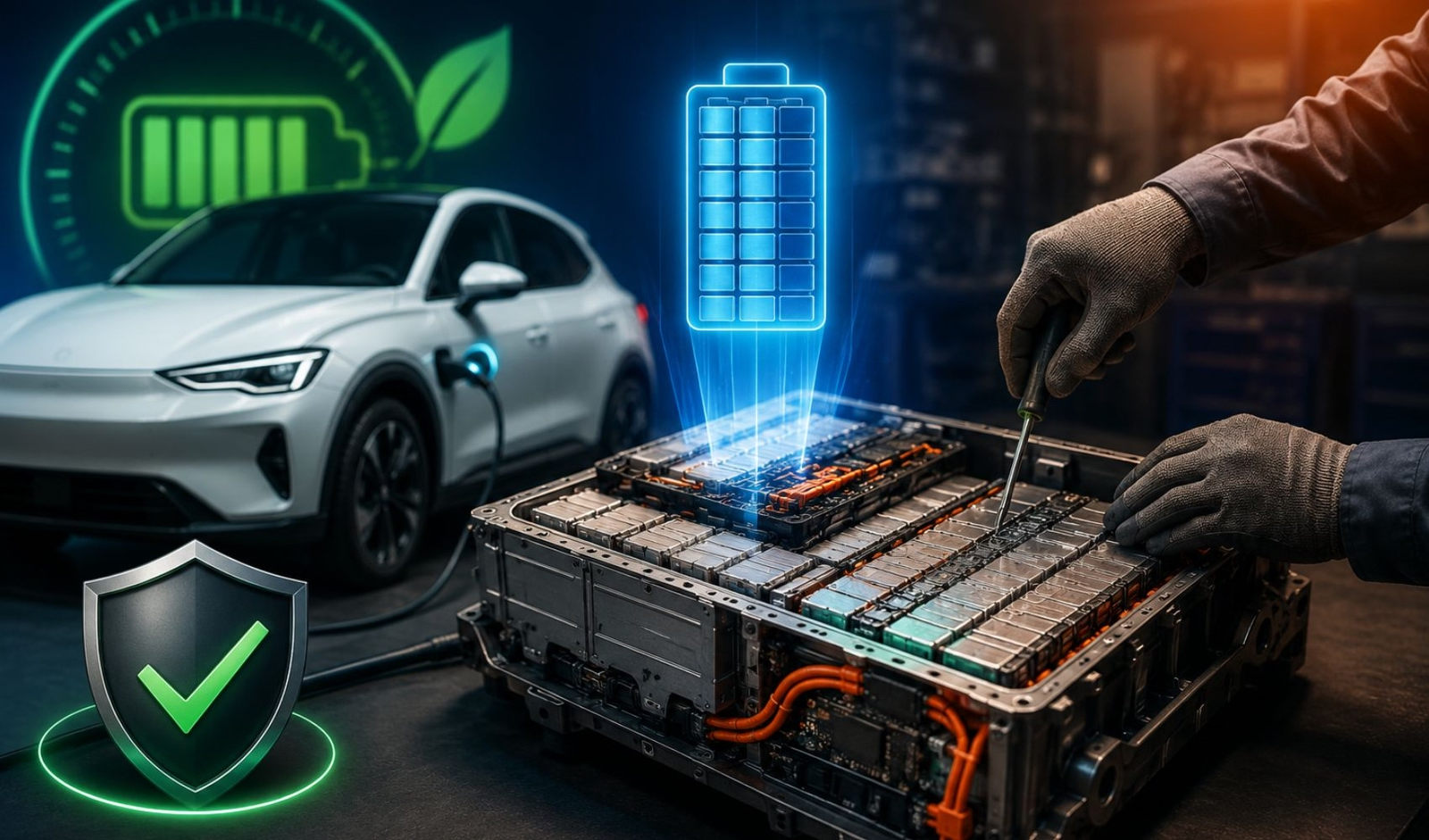
This concern is understandable because the battery is the most expensive part of an electric vehicle. Knowing how EV battery repair and replacement work can help owners make better decisions, avoid unnecessary expenses, and get the best value from their vehicle. The good news is that modern EV batteries are designed to last for many years and are much more reliable than many people think. In many cases, battery-related issues can be repaired without replacing the entire battery pack.
In this guide, we will explain everything you need to know about EV batteries, including how they work, how long they last, common battery problems, repair options, replacement costs, warranty coverage, and simple tips to keep your battery in good condition for a longer time.
Understanding EV Batteries
Most modern electric vehicles use lithium-ion battery packs. These batteries store electrical energy and supply power to the electric motor, allowing the vehicle to operate efficiently without using fossil fuels. An EV battery pack is much more complex than a traditional vehicle battery.
Instead of a single unit, it contains hundreds or even thousands of individual cells arranged into modules. These modules work together and are monitored by a Battery Management System (BMS), which continuously tracks battery temperature, voltage, charging performance, and overall health. The BMS plays a critical role in ensuring safety and efficiency. It helps prevent overheating, overcharging, and excessive discharge while maintaining balanced performance across all battery cells. Because of this advanced technology, many battery issues can often be diagnosed and addressed before they become major problems.
How Long Does an EV Battery Last?
Modern EV batteries are designed for long-term use and are built to withstand thousands of charging cycles throughout their lifetime. Most manufacturers provide battery warranties of around 8 years or 1.6 lakh kilometres, although coverage may vary depending on the brand and model. Under normal usage conditions, many EV batteries can continue functioning effectively for 10 to 12 years while retaining approximately 70 to 80 percent of their original capacity.
Unlike conventional car batteries that can fail suddenly, EV batteries generally degrade gradually over time. This means owners usually experience a slow reduction in driving range rather than an unexpected breakdown. For example, an EV that offered a driving range of 400 km when new may still deliver around 300 to 320 km after several years of regular use. While some loss of capacity is normal, proper maintenance and charging habits can significantly slow down the degradation process.
Signs That Your EV Battery May Need Attention
Recognizing battery-related issues early can help prevent expensive repairs and maintain vehicle performance. While occasional fluctuations may be normal, persistent problems should not be ignored.
Below are some common warning signs that may indicate your EV battery requires professional inspection.
Significant Range Reduction
A noticeable decrease in driving range is often one of the earliest signs of battery degradation.
If your vehicle consistently delivers much lower range than before under similar driving conditions, the battery may be losing capacity faster than expected. Monitoring range performance regularly can help identify potential issues early.
Slow Charging
If the battery suddenly starts taking longer than usual to charge, it could indicate an issue with the battery pack, charging system, or Battery Management System.
Charging delays may also affect daily usability, making it important to diagnose the cause as soon as possible.
Battery Warning Lights
Modern EVs continuously monitor battery performance and display warning alerts when abnormalities are detected. Any high-voltage battery warning light should be taken seriously. Ignoring these alerts may allow minor issues to develop into more significant and costly problems.
Battery Percentage Fluctuations
If the battery percentage rises or drops unexpectedly, it may indicate a sensor issue, cell imbalance, or BMS malfunction. Accurate battery readings are essential for proper range estimation and vehicle reliability, making this symptom worth investigating.
Reduced Performance
A battery that is no longer operating efficiently may affect acceleration, power delivery, and overall driving experience. If the vehicle feels less responsive than usual, the battery system should be inspected by qualified technicians.
Can EV Batteries Be Repaired?
Yes, in many situations EV batteries can be repaired successfully.
One of the biggest misconceptions surrounding electric vehicles is that every battery problem automatically requires a complete battery replacement. In reality, many faults affect only specific components and can often be resolved without replacing the entire battery pack.
As battery diagnostic technology continues to improve, repair solutions are becoming more practical and cost-effective. This helps reduce ownership costs while also minimizing electronic waste.
Common Repairable Issues
Faulty Battery Modules
An EV battery pack contains multiple modules working together as a single system.
If only one module becomes damaged or develops a fault, technicians may replace the affected module rather than the complete battery pack. This can significantly reduce repair costs.
Cell Imbalance
Over time, individual battery cells may become unbalanced, affecting charging efficiency and overall performance. Specialized diagnostic equipment can often identify and correct these imbalances, helping restore battery performance and driving range.
Battery Management System Problems
The Battery Management System is responsible for monitoring and controlling battery operations. Software glitches, sensor failures, or communication errors within the BMS can sometimes trigger warning messages even when the battery itself remains healthy. In many cases, these issues can be repaired through software updates or component replacement.
Cooling System Issues
Many modern EVs use dedicated cooling systems to regulate battery temperature. Problems involving coolant circulation, sensors, or cooling components may impact battery performance but can often be repaired separately without replacing the battery pack itself.
When Does an EV Battery Need Replacement?
Although many battery issues can be repaired, there are situations where complete replacement becomes the most practical solution. Battery replacement is typically considered only after thorough diagnostics confirm that repairs are either impossible or no longer cost-effective.
Severe Battery Degradation
As batteries age, their energy storage capacity gradually declines. If the battery loses a substantial portion of its original capacity and no longer provides acceptable driving range, replacement may be recommended to restore vehicle usability.
Major Internal Damage
Accidents, flooding, manufacturing defects, or severe overheating can sometimes cause irreversible damage inside the battery pack. When safety or structural integrity is compromised, replacing the battery may be the safest option.
Multiple Failed Modules
While replacing a single module can be economical, a battery pack with multiple failed modules may require extensive repairs. In such cases, complete battery replacement may provide better reliability and long-term value.
Warranty-Based Replacement
Many manufacturers include battery degradation coverage within their warranty programs. If battery performance falls below specified limits during the warranty period, owners may qualify for repair or replacement at little or no additional cost.
EV Battery Replacement Cost in India
Battery replacement remains one of the most expensive aspects of EV ownership, although costs continue to decline as technology advances.
Replacement pricing depends on battery capacity, vehicle segment, manufacturer, and availability of spare parts.
Vehicle Segment | Estimated Replacement Cost |
|---|---|
Small EVs | ₹3 lakh – ₹4.5 lakh |
Mid-Size EVs | ₹5 lakh – ₹7 lakh |
Premium EVs | ₹8 lakh – ₹12 lakh+ |
The battery generally accounts for around 30 to 40 percent of an EV's total cost.
The positive news is that battery prices have been steadily falling over the past decade. Increasing local manufacturing, technological improvements, and economies of scale are expected to make replacement more affordable in the future.
Does Fast Charging Damage EV Batteries?
Fast charging offers excellent convenience, especially during long-distance travel. However, frequent use of DC fast charging can contribute to slightly faster battery degradation over extended periods. This happens because fast charging generates additional heat, which can accelerate battery wear if used excessively.
Fortunately, modern EVs are equipped with advanced battery management systems that help regulate charging speeds and temperatures. Occasional fast charging is generally safe and is already considered during vehicle development. For optimal battery health, experts recommend using home AC charging for daily needs and reserving fast charging primarily for road trips and emergency situations.
Tips to Extend EV Battery Life
Good charging and maintenance habits can significantly improve battery longevity and preserve driving range.
Avoid Frequent Full Charges
For daily driving, maintaining the battery between 20 and 80 percent is generally considered beneficial.
This reduces stress on battery cells and may slow long-term degradation.
Avoid Deep Discharges
Regularly allowing the battery to reach extremely low charge levels can negatively impact battery health. Whenever possible, recharge before the battery becomes critically low.
Minimize Exposure to Extreme Heat
High temperatures can accelerate battery wear and reduce long-term efficiency. Parking in shaded areas or covered parking spaces can help protect the battery from excessive heat.
Use Fast Charging Wisely
While fast charging is convenient, relying on it for every charging session may increase battery stress over time.
A balanced charging routine is usually the best approach.
Keep Software Updated
Manufacturers frequently release software updates that improve battery management, efficiency, and charging performance. Installing these updates can help maintain optimal battery operation.
What Happens to Old EV Batteries?
Even when an EV battery is no longer suitable for vehicle use, it often retains a significant amount of energy storage capacity.
Rather than being discarded immediately, many batteries can be given a second life in various applications.
Common second-life uses include:
Home energy storage systems |
Solar power backup solutions |
Commercial energy storage projects |
Grid stabilization applications |
Eventually, batteries can be recycled to recover valuable materials such as lithium, nickel, cobalt, and copper. Recycling helps reduce environmental impact while supporting future battery production.
Are EV Battery Replacements Common?
Despite common concerns, complete battery replacement remains relatively rare for most EV owners. Modern battery technology has improved significantly, and manufacturers conduct extensive testing to ensure long-term durability. Many EV owners sell or upgrade their vehicles long before battery replacement becomes necessary. In addition, warranty coverage provides added financial protection during the early years of ownership. As battery technology continues to evolve, long-term reliability is expected to improve even further, making EV ownership increasingly practical and cost-effective.
Final Words
EV batteries are far more durable than many people assume. While battery degradation is a natural process, modern lithium-ion batteries are engineered to provide years of reliable service and often continue performing well beyond their warranty period. The most important thing to remember is that not every battery issue requires a complete replacement. In many cases, problems involving individual modules, software systems, sensors, or cooling components can be repaired at a significantly lower cost.
By following proper charging practices, maintaining your vehicle regularly, and addressing issues early, you can maximize battery life and reduce long-term ownership expenses. As EV technology continues to advance, battery repair and replacement are expected to become even more efficient, affordable, and accessible for vehicle owners across India.

Written by Team CarBike4U
Editorial & Research Team
CarBike4U's dedicated editorial team researches, reviews, and updates content to bring you the most accurate automotive news, pricing, comparisons, and ownership guidance.